Every parent has had the moment: your eight-year-old is rebuilding the same Minecraft redstone contraption for the fourth time, tweaking one variable to see what changes. Or your eleven-year-old asks, “Wait, how does the app actually know it’s me when I type my password?” These small moments are often the first real signals that a child is ready to move from using technology to understanding and building it. But how do you know if it’s genuine readiness, or just a passing phase? Below are the concrete signs that show up in real classrooms and real living rooms — not vague milestones, but patterns parents and teachers actually observe.
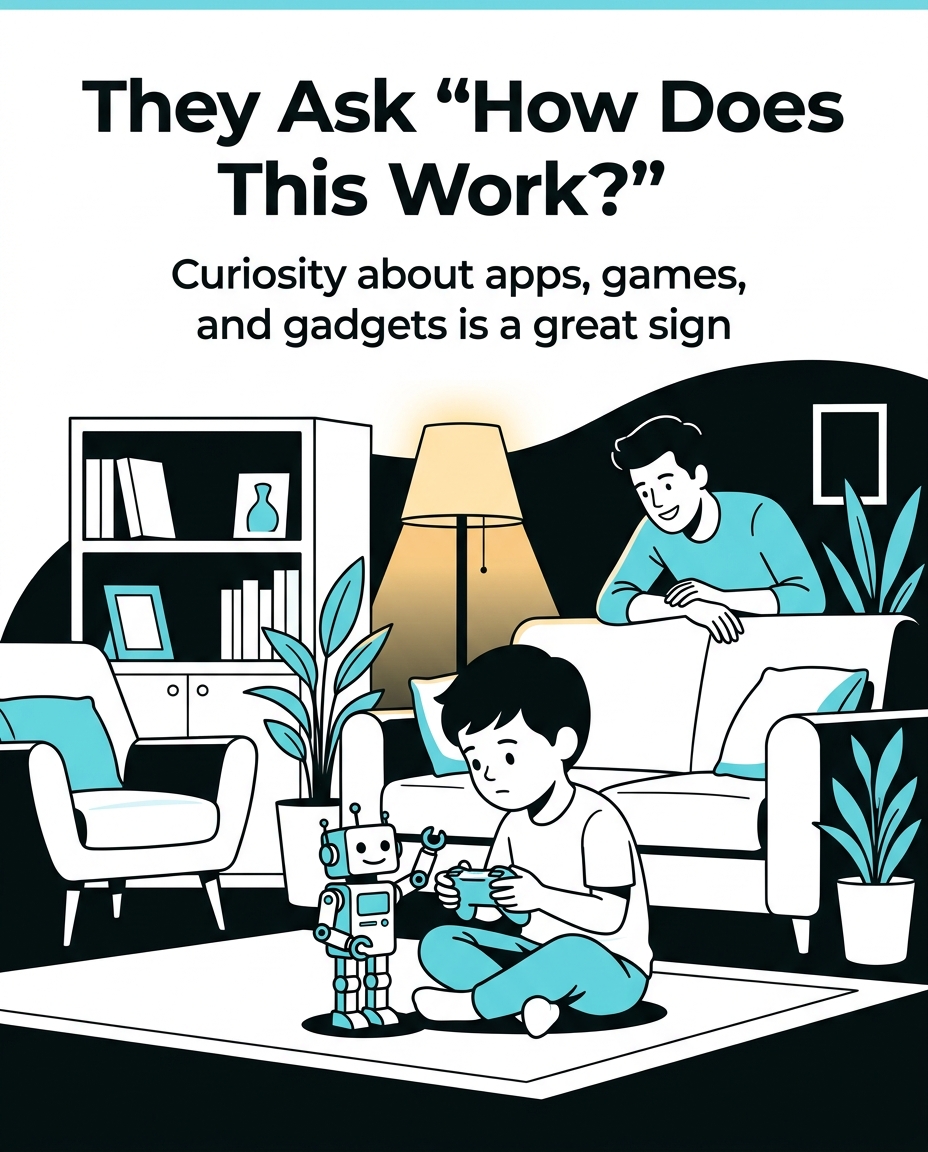
Sign 1: They Ask “How” and “Why,” Not Just “What”
A six-year-old who says “I want the game to do this” is showing curiosity. A nine-year-old who asks “why does the game freeze when I press two buttons at once?” is showing something deeper — an instinct for cause and effect in systems. In a 2023 pilot class of 24 students (ages 9–12) at a Cyber School USA introductory workshop, instructors noted that the students who asked process-based questions (“how does the loop know when to stop?”) completed their first Scratch project in half the time of peers who only asked outcome-based questions (“can you make it look cooler?”). That single shift — from “what” to “how” — is one of the clearest early indicators of coding readiness.
Sign 2: They Enjoy Repetition With a Purpose
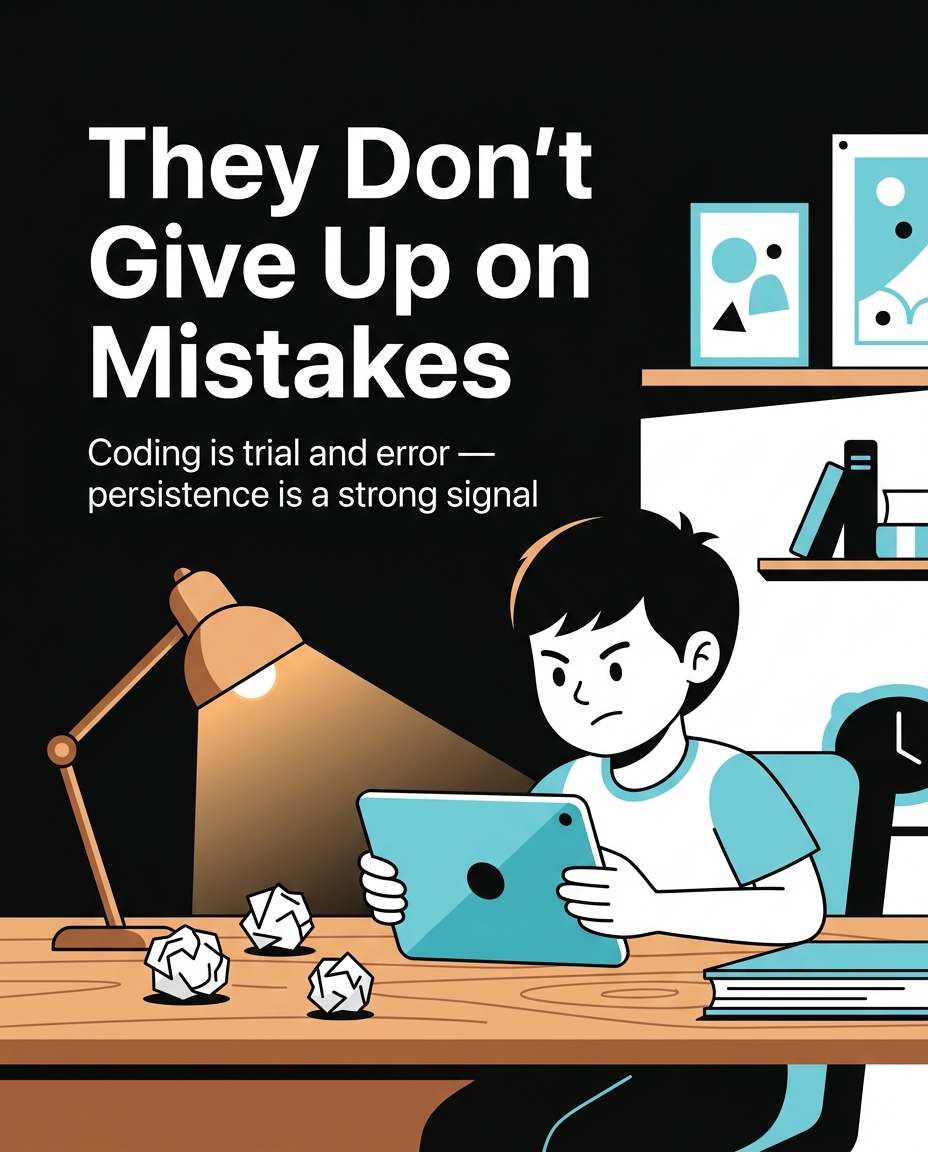
Coding is iterative by nature: write, test, fail, adjust, test again. Kids who get frustrated after one failed attempt and walk away often aren’t ready yet — and that’s completely normal for their age. But kids who say “let me try it one more way” are demonstrating the debugging mindset that coding requires. One parent in Austin, Texas, described her 10-year-old son rebuilding a simple calculator app five times over a weekend, each time trying to fix a bug where subtraction returned the wrong number. He wasn’t told to keep trying — he wanted to. That self-directed persistence, more than raw intelligence, predicts success in early programming courses.
Sign 3: They Take Apart Systems — Physical or Digital
Kids who disassemble an old remote control, rearrange app icons into folders “that make more sense,” or build elaborate rule systems for a card game they invented are practicing the same logical structuring that underlies code. A well-known example: a 7-year-old in a Cyber School USA parent survey was found reorganizing her tablet’s home screen into categories by color and function without being asked — a small act, but one that reflects systems thinking. This doesn’t mean every child needs to be an obsessive tinkerer; it means the instinct to organize, categorize, and question “why is it built this way” is a strong signal.
Sign 4: They Can Sit With Frustration for a Few Minutes
Coding is not instantly gratifying. A child who melts down the moment something doesn’t work on the first try may need another year of foundational patience-building — often through puzzles, board games, or Lego instructions — before formal coding lessons. On the other hand, a child who can tolerate 5–10 minutes of “this isn’t working yet” without quitting is developmentally ready for structured logic problems. In practice, instructors use a simple test: give the child a broken block-code sequence (in Scratch or Blockly) and see how long they attempt to fix it before asking for help. Kids who try three or more independent fixes before asking for help are typically ready for a beginner course; kids who ask for help immediately usually benefit from a gentler, game-based introduction first.
Sign 5: They’re Already Comfortable Navigating Interfaces
This doesn’t mean owning the newest device — it means basic digital fluency: navigating menus, understanding that a “back” button undoes an action, recognizing icons, typing (even slowly). A child who still needs help finding the home button on a tablet at age 9 isn’t behind, but they likely need a few more months of general digital literacy before coding concepts will click. Most Cyber School USA beginner tracks (ages 8–10) start with a quick informal check: can the child open an app, navigate two menus deep, and close it without help? If yes, they usually have enough interface comfort to focus on logic instead of getting stuck on navigation.
Sign 6: They Show Interest in “Why Things Are Safe or Unsafe” Online
This is often overlooked, but it’s a meaningful sign. A child who asks “how do hackers get into accounts?” or “why does this website want my email?” is showing early cybersecurity curiosity — a natural on-ramp to coding, since so much of modern programming intersects with security concepts. One 12-year-old student, after watching a video about a data breach affecting a gaming platform he used, asked his parent, “Could someone code something to stop that?” That single question led him into an introductory Python and cybersecurity fundamentals course — and six weeks later, he built his first working password-strength checker script.
Sign 7: They Like Building Rules, Not Just Playing by Them
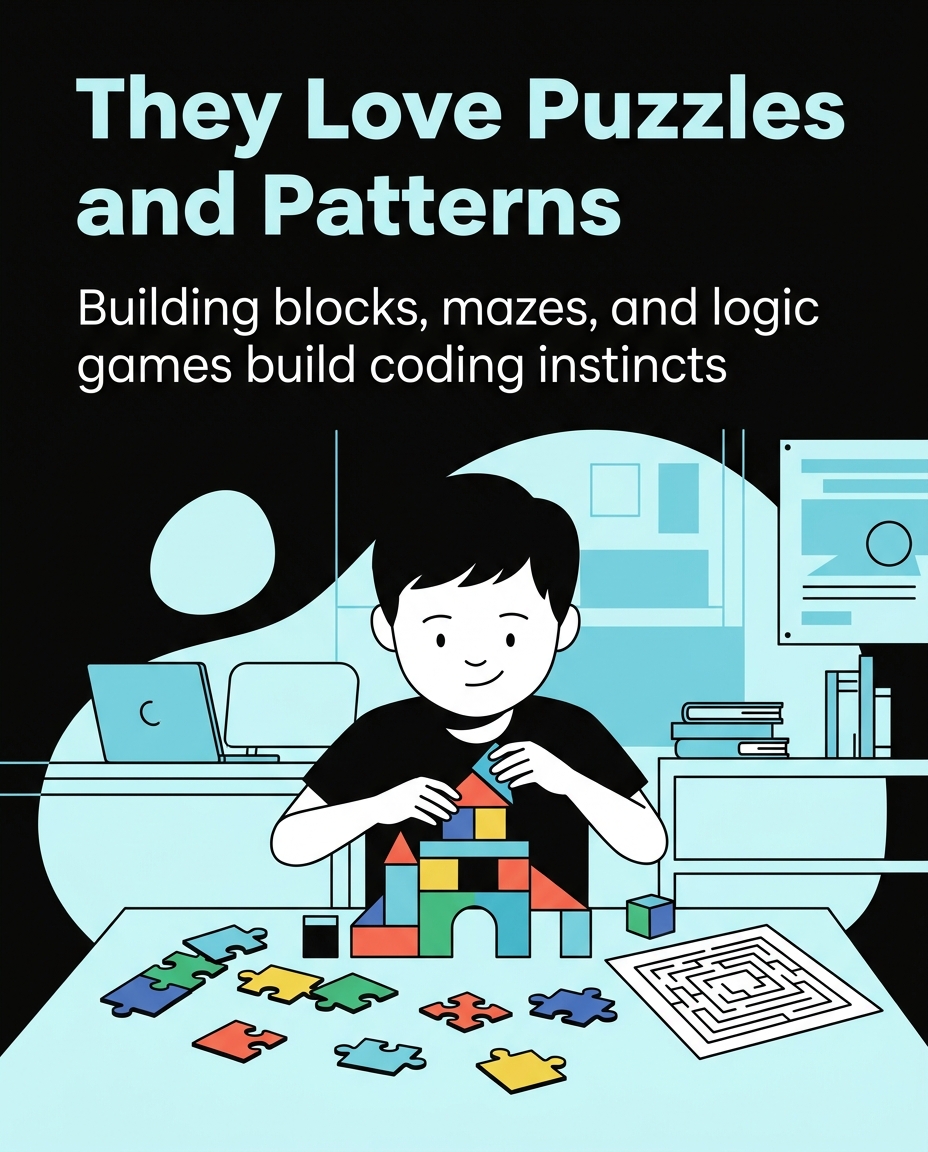
Kids who invent their own games — with specific rules, scoring systems, and exceptions — are practicing algorithmic thinking long before they touch a keyboard. A parent in Portland, Oregon, described her 8-year-old daughter creating an elaborate “point system” for a backyard scavenger hunt, complete with bonus multipliers and penalty rules for “cheating.” That instinct to formalize logic into rules is precisely what a programming language asks a child to do, just with syntax instead of spoken instructions.
What If Your Child Shows Only Some of These Signs?
Readiness isn’t all-or-nothing. Most children show 2–3 of these signs strongly and the rest only partially — and that’s completely fine. Coding readiness is a spectrum, not a single threshold. A child who loves taking things apart but hasn’t shown much patience with frustration might do best with a game-based, highly visual introduction (like block coding) rather than a syntax-heavy language. The goal isn’t to rush a child into “real coding” — it’s to match the format of the introduction to where they already are.
Want to try it out? 🚀
- 🎬 Sample lesson: Free trial
- 📋 Full syllabus: View the program
- 🎓 Enroll & details: Cyber School courses
The International Cyber School Program (Grades 4–9): live online, globally recognized certifications, from fundamentals to CTF.
Frequently Asked Questions
At what age do most children start showing readiness signs for coding?
Most children begin showing early signs — like curiosity about “how” and “why,” or enjoying building rule-based games — between ages 7 and 10. Some show signs earlier through tinkering and system-organizing behavior, while others develop readiness closer to age 11 or 12, often triggered by an interest in gaming or online safety.
My child gets frustrated easily. Does that mean they’re not ready to learn coding?
Not necessarily. Frustration tolerance can be built gradually through logic puzzles, board games, and simple building tasks before introducing formal coding. Many children who struggle with frustration at first develop the patience for debugging within a few months of low-pressure, game-based coding exposure.
Is it better to start with block-based coding (like Scratch) or a real programming language?
For most children under 11, block-based coding is the better starting point because it removes syntax errors and lets kids focus purely on logic and sequencing. Children who show strong systems-thinking and patience — often around age 11 or 12 — can transition more smoothly into text-based languages like Python.