
In September 2019, a misconfigured AWS S3 bucket exposed the personal data of over 100 million Capital One customers. The breach wasn’t caused by a zero-day exploit or a sophisticated nation-state actor — it was traced back to a former AWS employee who exploited overly permissive firewall rules and an IAM role with far more access than it needed. The attacker used a Server-Side Request Forgery (SSRF) vulnerability to assume a role that had permission to list and read every bucket in the account. One over-privileged role turned a single misconfiguration into one of the largest financial data breaches in US history.
This is the recurring lesson behind nearly every major breach post-mortem: the principle of least privilege (PoLP) isn’t a theoretical best practice — it’s the difference between a contained incident and a catastrophic one. For security professionals, understanding least privilege in the abstract is easy. Implementing it across sprawling cloud environments, legacy systems, and human workflows is where the real work begins.
What Least Privilege Actually Means in Production Environments
The principle of least privilege states that any user, process, or system component should have access to only the resources and permissions strictly necessary to perform its function — nothing more. In practice, this means an accounting application shouldn’t have write access to the HR database, a junior developer shouldn’t have production database credentials, and a monitoring script shouldn’t run with root privileges just because “it was easier to set up that way.”
The gap between this principle and reality is often enormous. A 2023 report from Microsoft found that over 50% of Azure AD tenants had at least one account with unused admin privileges — accounts that could have been scoped down without breaking a single workflow. These aren’t edge cases; they’re the norm.

Case Study: The Target Breach and Third-Party Access
The 2013 Target breach, which compromised 40 million credit card records, is a textbook example of least privilege failure through third-party access. Attackers stole credentials from Fazio Mechanical Services, an HVAC contractor with legitimate access to Target’s vendor portal for billing and contract submission. That access, however, was not properly segmented from Target’s broader internal network. The HVAC vendor account should never have had a network path to point-of-sale systems — but it did.
Had Target enforced network-level least privilege — restricting the vendor’s access strictly to the billing systems it needed — the stolen credentials would have been far less useful to the attackers. Instead, a narrow business relationship became a bridge into the entire retail network.
Applying Least Privilege to Cloud IAM: A Practical Framework
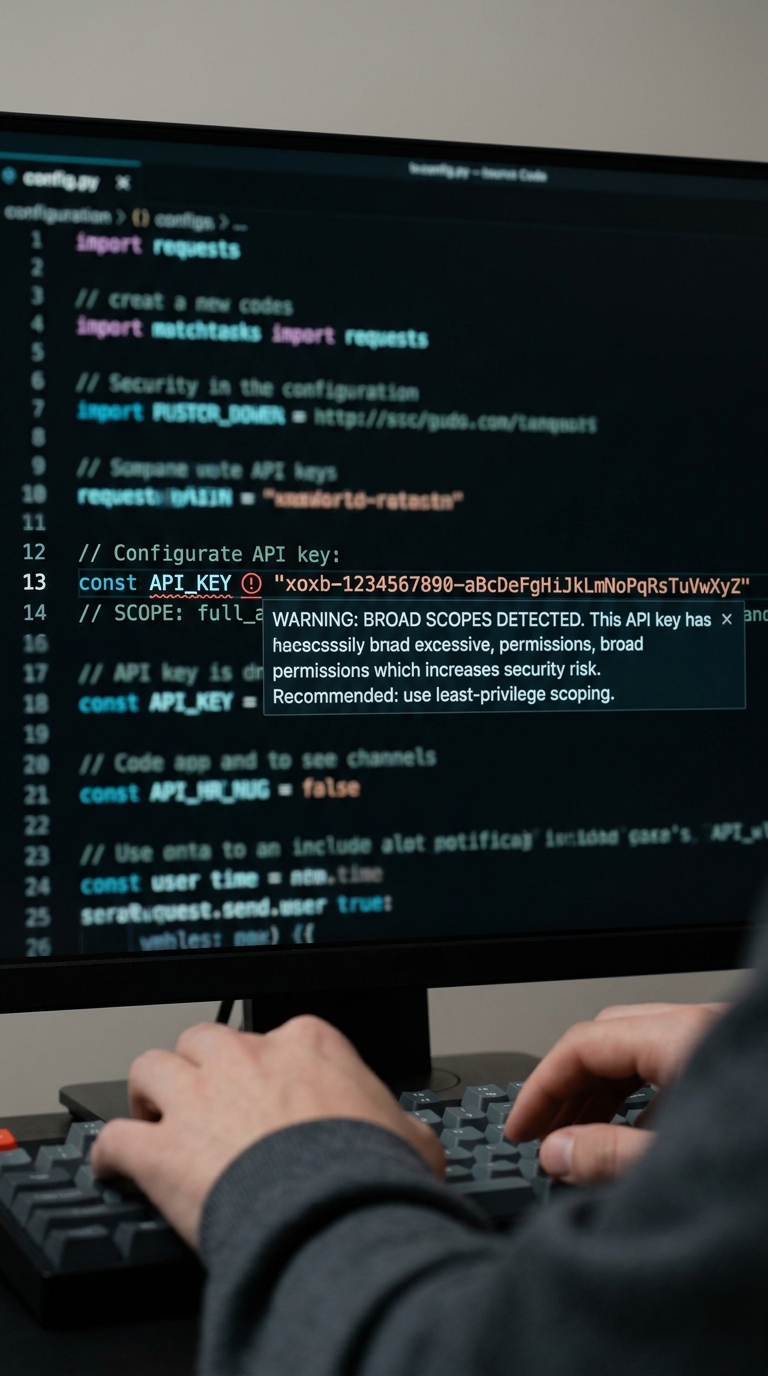
In modern cloud environments (AWS, Azure, GCP), least privilege is enforced primarily through Identity and Access Management (IAM) policies. A common real-world mistake: granting a Lambda function the managed policy AmazonS3FullAccess when it only needs s3:GetObject on a single bucket path.
A concrete remediation workflow used by many SOC teams looks like this:
- Audit with access analyzers — AWS IAM Access Analyzer or GCP Policy Analyzer can flag roles with unused permissions over a 90-day window.
- Scope by resource ARN, not service-wide — instead of s3:* on all resources, restrict to arn:aws:s3:::invoice-bucket/*.
- Use time-bound elevation — tools like AWS IAM Identity Center or HashiCorp Vault allow “just-in-time” privilege escalation for 15–60 minutes instead of standing admin access.
- Separate duties by role, not by convenience — a CI/CD pipeline that deploys code should not share credentials with the pipeline that manages infrastructure state.
Netflix’s internal security team has publicly discussed using automated tooling (their open-source project “Repokid”) to continuously right-size IAM roles based on actual CloudTrail usage data — automatically stripping unused permissions rather than relying on manual quarterly reviews. This kind of continuous enforcement is what separates a policy on paper from a control that actually works.
Least Privilege for Human Accounts: The Ransomware Connection
Least privilege isn’t just an infrastructure concern — it’s a primary defense against ransomware lateral movement. The 2021 Colonial Pipeline attack began with a single compromised VPN password for an account that, according to subsequent congressional testimony, had no multi-factor authentication and access broader than its function required. Once inside, attackers moved through the network largely unimpeded.
Compare this to organizations following a tiered access model, such as Microsoft’s “Enhanced Security Admin Environment” (ESAE), sometimes called the “Red Forest” architecture. In this model, domain administrator credentials are never used on standard workstations, and admin accounts are tiered (Tier 0 for domain controllers, Tier 1 for servers, Tier 2 for workstations) so that compromising a help-desk technician’s laptop can never lead to full domain compromise. This tiering is least privilege applied at the identity architecture level, and it’s one of the most effective known mitigations against ransomware propagation.
Common Implementation Failures
Even security-mature organizations get least privilege wrong in predictable ways:
- Role explosion: Teams create overly broad “developer” or “admin” roles because granular roles feel like too much overhead — resulting in dozens of people holding permissions they use maybe 5% of the time.
- Privilege creep: An employee moves from Support to Engineering to DevOps over three years, accumulating access at each stage without ever having old permissions revoked. A 2022 Varonis study found the average employee at a mid-size company has access to 11 million files on day one — most never used.
- Break-glass accounts left permanently open: Emergency admin accounts, meant for rare incidents, often remain active with no expiration and no monitoring.
- Service accounts with no owner: Automated accounts often outlive the project they were created for, retaining access long after anyone is tracking them.

Making Least Privilege Sustainable
The organizations that succeed with least privilege don’t treat it as a one-time audit — they build it into lifecycle processes: automated de-provisioning tied to HR systems, quarterly access recertification owned by resource owners (not just IT), and IAM policies generated from observed usage rather than developer requests. Google’s BeyondCorp model, which replaced perimeter-based trust with continuous, context-aware authorization, is perhaps the most mature public example of least privilege scaled to an entire enterprise — every request, internal or external, is evaluated on identity, device posture, and specific resource need before access is granted.
For most organizations, the starting point is simpler: pick one IAM role, one shared admin account, or one vendor integration this month, and cut its permissions down to exactly what logs show it actually uses. Least privilege isn’t achieved through a single project — it’s a discipline applied one access grant at a time.
Want to try it out? 🚀
- 🎬 Sample lesson: Free trial
- 📋 Full syllabus: View the program
- 🎓 Enroll & details: Cyber School courses
CSRP — Cyber Security Responder & Practitioner. Hands-on labs, job-ready skills, industry certifications for career-changers and pros.
Frequently Asked Questions
What is the principle of least privilege in simple terms?
It means giving any user, application, or system only the minimum access needed to do its job — no extra permissions “just in case.” This limits the damage if that account or system is ever compromised.
How does least privilege differ from zero trust?
Least privilege is a specific access-control rule (minimum necessary permissions), while zero trust is a broader architecture that assumes no user or device is automatically trusted and continuously verifies identity and context before granting any access, often using least privilege as one of its core enforcement mechanisms.
What’s a practical first step for a company that hasn’t implemented least privilege yet?
Run an access audit using built-in cloud tools (like AWS IAM Access Analyzer or Azure AD access reviews) to identify unused permissions over the last 90 days, then remove or scope down the highest-risk over-privileged accounts first — typically shared admin accounts and third-party integrations.