

Every parent eventually faces the same moment: a child comes home and says, “Everyone else has one.” The question of child smartphone readiness isn’t really about age on a birthday cake — it’s about a mix of maturity, digital literacy, and the environment the phone will actually be used in. There’s no single national rule, but there is a way to think about it that removes the guesswork.
The Real Numbers Behind the Pressure
According to a 2023 Pew Research Center survey, 95% of US teens aged 13-17 have access to a smartphone, and the average age a child in the US gets their first phone has dropped to around 10 years old — down from 12 just a decade ago. Common Sense Media reports that 42% of kids now own a smartphone by age 10, and 71% by age 12. That pressure is real, but ownership data doesn’t measure readiness — it measures market trends, not maturity.
Take the case of the Rodriguez family in Austin, Texas. Their 9-year-old daughter, Mia, wanted a phone because three of her four best friends had one. Instead of buying immediately, her parents ran a 60-day “readiness trial” using an old iPod touch with Wi-Fi-only messaging. Mia had to demonstrate she could leave it in the kitchen overnight, message respectfully in a family group chat, and tell her parents when a classmate sent something confusing. She passed on attempt two. That process — not the calendar — became the real gatekeeper.

Signs of Readiness That Matter More Than Age
Cybersecurity educators and child psychologists generally agree that readiness shows up in behavior, not birth year. Concrete signals include:
- Impulse control: Can the child wait to reply to a message instead of obsessively checking every few minutes?
- Honesty under pressure: Does the child tell a parent when something online feels wrong, even if it means losing screen time?
- Understanding of permanence: Does the child grasp that a screenshot, a comment, or a photo can resurface years later?
- Basic security habits: Can the child set a passcode, recognize a suspicious link, and understand why sharing a password — even with a best friend — is risky?
A useful real-world test: at Lincoln Middle School in Ohio, a 6th-grade digital literacy unit asked students to identify which of five sample text messages were phishing attempts disguised as “your friend’s account is locked.” Only 38% of 11-year-olds correctly flagged all three fake messages, compared to 74% of 13-year-olds. That gap illustrates why age 11 and age 13 are not interchangeable when it comes to smartphone risk exposure — two years of brain development changes a lot.
What a Phone Actually Exposes a Child To
It’s not just “the internet” in the abstract — it’s specific, nameable risks. Group chats can turn into exclusion tactics (a 2022 study by the Cyberbullying Research Center found 15% of middle schoolers reported being purposefully left out of a group chat as a form of bullying). Gaming platforms tied to phones, like Discord-linked mobile apps, have had documented cases of adults posing as teens to build trust before requesting private photos — the FBI’s 2023 IC3 report logged over 7,000 sextortion complaints involving minors, a number that has tripled since 2021. And app stores make in-app purchases dangerously easy: one Texas family discovered a $412 charge after their 8-year-old tapped through a game’s “loot box” prompts without understanding real money was involved.
None of this means phones are inherently dangerous — it means unsupervised, unprepared access is the actual risk factor, not the device itself.
A Practical Readiness Framework
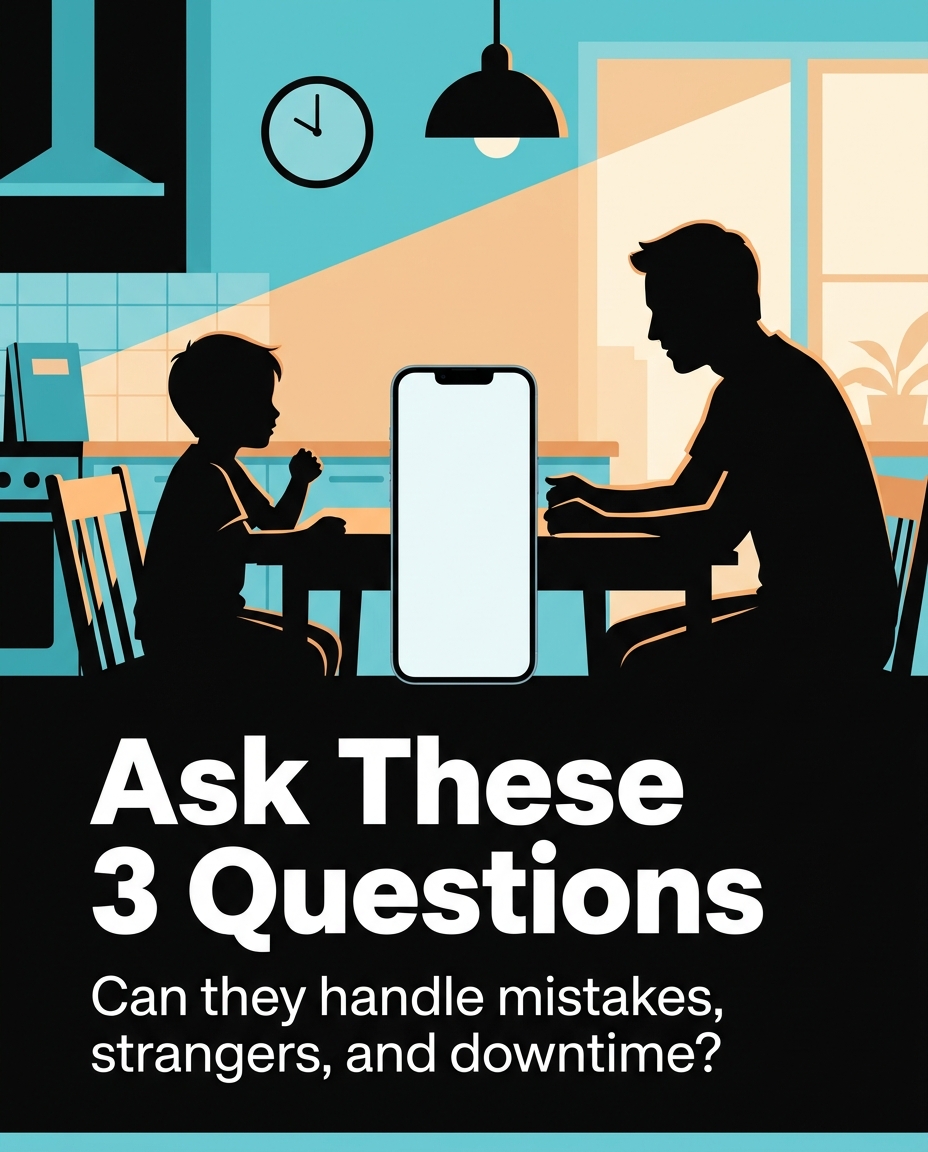
Instead of asking “How old should my child be?”, try asking these four questions:
- Purpose: Does the child need it for a real reason (walking home alone, sports pickup, staying in touch after a divorce split-schedule) or mainly for social status?
- Supervision plan: Will there be parental controls, agreed check-ins, or shared account visibility for at least the first year?
- Trial period: Has the child shown responsible behavior with a lower-stakes device first — a tablet, smartwatch, or basic phone?
- Conversation history: Have you already discussed strangers online, sharing images, and what to do if something feels wrong — before the phone arrives, not after?
Many families use a staged approach: a GPS smartwatch like a Gabb Watch around ages 7-9, a basic talk-and-text phone (Gabb Phone or Light Phone) around 10-11, and a full smartphone with parental controls around 12-13, once app literacy and impulse control are demonstrated. This mirrors how driving works — a learner’s permit before a full license — and gives kids a graduated runway instead of an all-or-nothing leap.
What Parents Can Do Before Handing Over the Phone
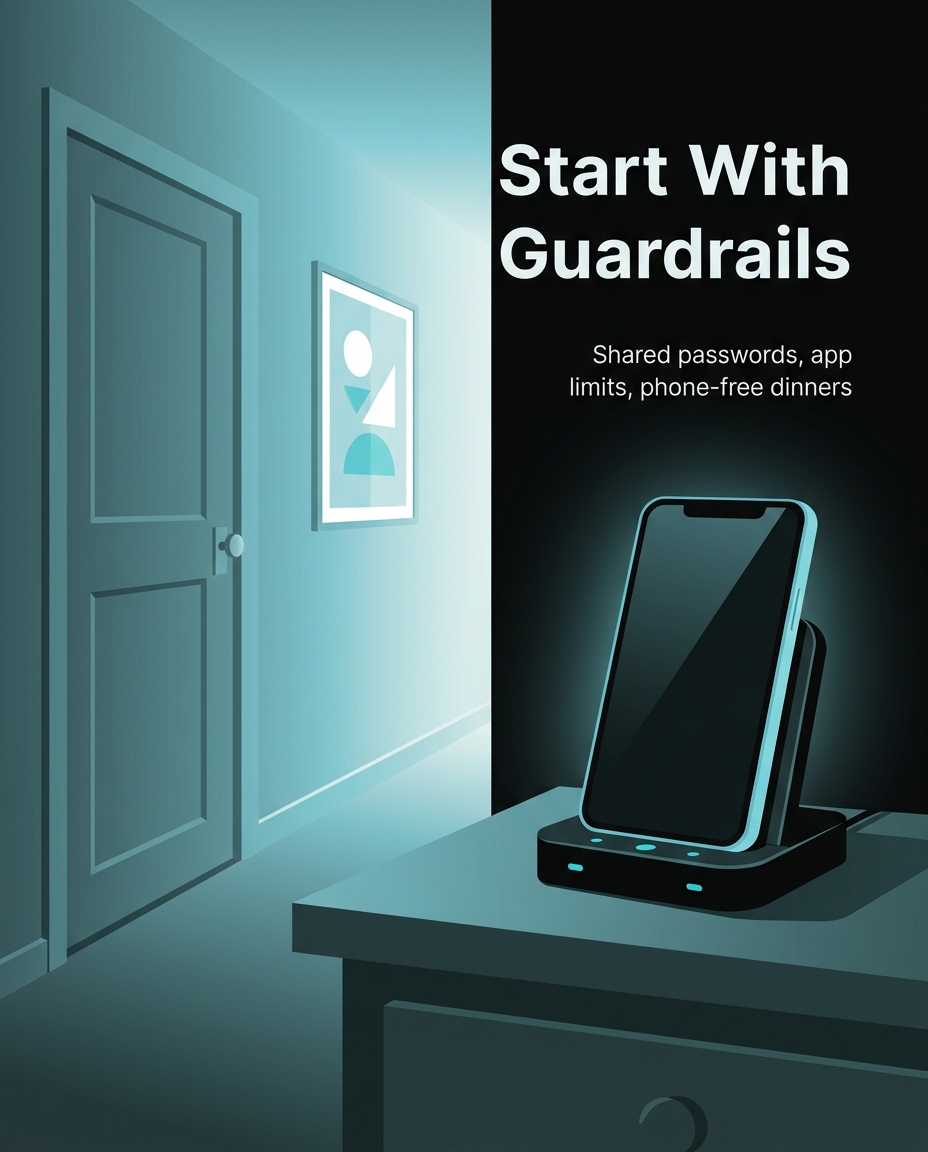
Preparation beats restriction. A short “family tech agreement” — even a one-page printed document both parent and child sign — sets expectations clearly: no phones at the dinner table, no accepting friend requests from strangers, no sharing passwords, and a clear rule that parents can check the phone at any time without it being treated as a punishment. Families who set this agreement up front report far fewer conflicts later, because the rules were negotiated calmly rather than imposed during a crisis.
It also helps to teach specific skills rather than vague warnings. Instead of saying “be careful online,” show your child an actual phishing text and ask them to spot the red flags together. Instead of saying “don’t talk to strangers,” role-play what to do if a game character asks for a phone number. Specificity sticks; generalities don’t.
The Bottom Line
Child smartphone readiness isn’t a switch that flips at 11, 12, or 13 — it’s a combination of maturity, real need, and a supervision plan built before the device arrives. The families who navigate this most smoothly treat it the way they’d treat a first car: not a reward for turning a certain age, but a responsibility earned through demonstrated judgment, with training wheels along the way.
Want to try it out? 🚀
- 🎬 Sample lesson: Free trial
- 📋 Full syllabus: View the program
- 🎓 Enroll & details: Cyber School courses
The International Cyber School Program (Grades 4–9): live online, globally recognized certifications, from fundamentals to CTF.
Frequently Asked Questions
What is the average age kids get their first smartphone in the US?
Recent data from Common Sense Media shows the average age has dropped to around 10, with 71% of kids owning a smartphone by age 12 — though ownership age doesn’t equal readiness.
What’s a good alternative to a full smartphone for a younger child?
Many families use a staged approach: a GPS smartwatch around ages 7-9, then a basic talk-and-text phone around 10-11, before moving to a full smartphone with parental controls around 12-13.
How can I test if my child is ready for a phone before buying one?
Try a trial period with a lower-stakes device (an old tablet, iPod, or smartwatch with messaging) and observe whether the child follows agreed rules, tells you about uncomfortable messages, and can resist constant checking.