

In 2023, the FBI’s Internet Crime Complaint Center logged more than 26,000 reports involving online financial sextortion of minors, a number that has climbed every year since 2021. Behind that statistic are real families — like the Michigan parents who discovered their 13-year-old son had been messaging someone posing as a teenage girl on Discord for three weeks before the account demanded money and threatened to share private photos. He never met the person. He never gave out his address. But he trusted a stranger, because the stranger felt like a friend.
This is the reality parents need to talk about — not “don’t talk to strangers,” which made sense in a world of playgrounds and parking lots, but a more nuanced conversation about how strangers operate online: patiently, convincingly, and often disguised as someone a kid’s own age.
Why the Old “Stranger Danger” Talk Doesn’t Work Anymore
The classic warning — “never talk to strangers” — was built for physical spaces. Online, a 12-year-old typically interacts with dozens of people they’ve never met in person every single day: teammates in Roblox, commenters on a YouTube video, other players in a Discord server for a shared favorite game. Telling a kid to avoid all strangers online is like telling them to avoid all air. It’s unrealistic, and kids know it, so they tune the warning out entirely.
What actually works is teaching kids to recognize *behavior patterns*, not just the label “stranger.” A real case from the National Center for Missing & Exploited Children involved a 14-year-old girl in Ohio who was contacted on Instagram by an account claiming to be a 15-year-old boy from her state. Over six weeks, “he” asked increasingly personal questions, complimented her constantly, and eventually asked for a photo “just between us.” The account had no mutual friends, a profile created two months earlier, and photos that reverse-image search later revealed were stolen from a stranger’s public profile. The girl told her mother because they had already talked about exactly this pattern — not because she’d been told “don’t talk to strangers.”
Teach the Pattern, Not Just the Rule
Instead of a blanket rule, walk your child through the specific tactics groomers and scammers actually use. Kids remember concrete examples far better than abstract warnings.
- Excessive flattery, fast. A new contact who showers compliments within the first few messages (“you’re so mature for your age,” “you’re way cooler than kids at my school”) is using a known manipulation tactic to build trust quickly.
- Secrecy requests. Any adult or peer who says “don’t tell your parents” or “this is our secret” is raising a red flag — legitimate friends don’t need secrecy from a kid’s family.
- Moving to a private platform. A common pattern is starting on a public game or app (Roblox, Fortnite, a YouTube comment section) and quickly pushing to move the conversation to Snapchat, Discord DMs, or Telegram, where messages disappear and parents can’t see them.
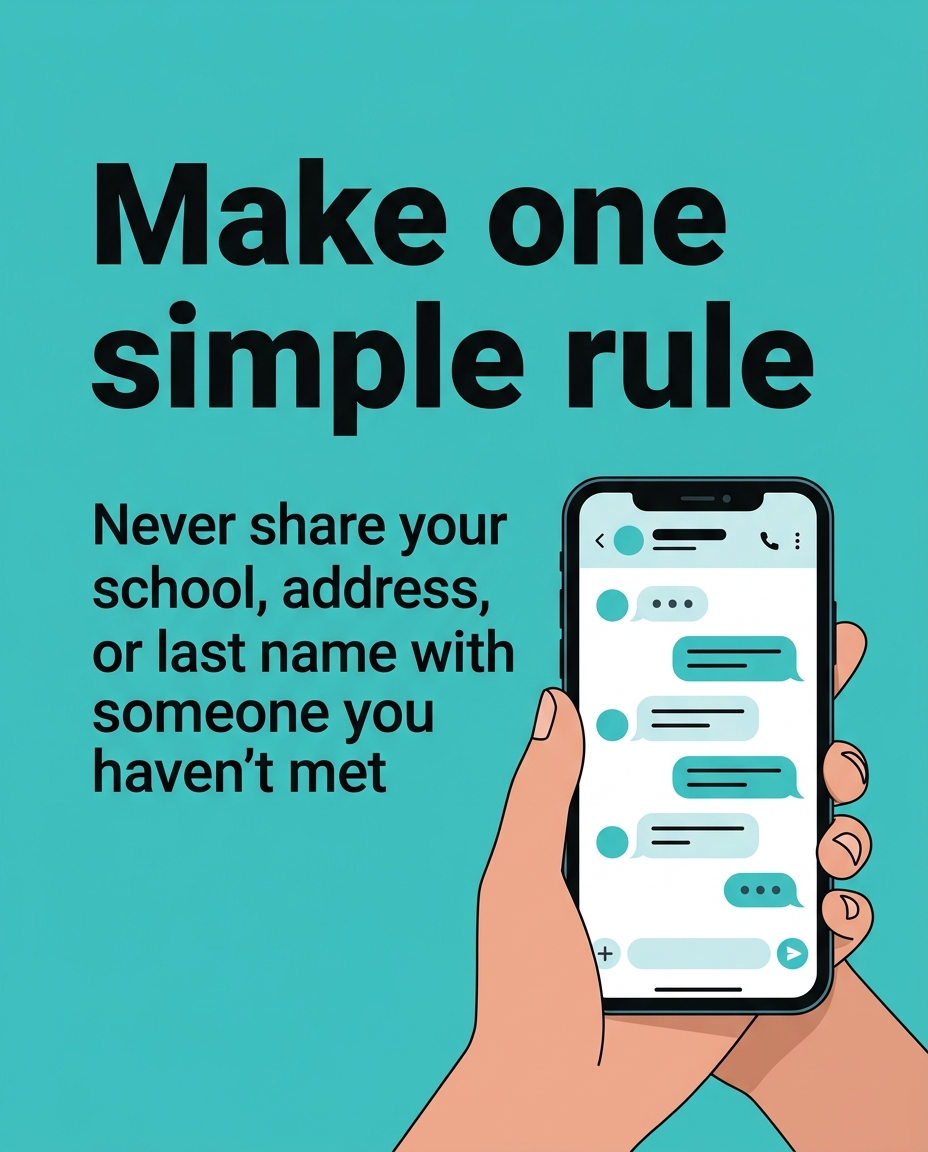
- Small requests that escalate. It rarely starts with “send me a photo.” It starts with “what’s your favorite color,” then “what school do you go to,” then a photo request. Each step feels small, which is exactly the point.
Sit down with your child and actually role-play these scenarios. Ask: “If someone you just met in a game said ‘don’t tell your mom we talk,’ what would you do?” Practicing the response out loud, even once, makes it far more likely your child will recognize the moment when it actually happens.
Make Your Child a Willing Reporter, Not a Silent One
The single biggest factor in whether a bad interaction gets stopped early is whether the child tells an adult. In the Ohio case above, the girl came forward after six weeks — but many kids never do, out of fear they’ll be blamed or lose access to their device. A 2022 Thorn survey of minors found that 45% of kids who experienced an unwanted sexual interaction online did not tell a parent, and the top reason cited was fear of losing internet or phone privileges.
This means the most important sentence you can say to your child isn’t “never talk to strangers” — it’s “you will never be in trouble for telling me something made you uncomfortable, even if you did something you weren’t supposed to.” Say this explicitly, more than once. Kids who believe reporting leads to punishment will hide the exact situations you most need to know about.
Set up a simple, low-friction reporting habit: a code word your child can text you if they feel unsafe and need you to call with an “excuse” to leave a chat or situation, or a rule that any screenshot of a weird message gets shown to you with zero follow-up questions about how it started.
Use the Platforms Your Kids Actually Use
Generic advice fails because every platform has different risks. Roblox and Fortnite are full of voice chat with strangers during gameplay. Discord servers, especially unmoderated ones tied to a game or fandom, are a known entry point for grooming because they combine anonymity with tight-knit community feel. Instagram and Snapchat carry the added risk of disappearing messages, which groomers exploit specifically because there’s no permanent record for a parent to find later.
Rather than banning these platforms outright — which often just pushes kids to hide their use — go through the parental controls together. On Discord, enable “Keep Me Safe” content filtering and restrict DMs to friends only. On Instagram, set the account to private and turn on “Limits” for unwanted contact. On Roblox, disable chat for younger accounts and use the built-in parental dashboard to see friend requests. Doing this together, and explaining *why* each setting matters, teaches your child to think about privacy settings as a life skill, not a punishment imposed on them.
A Real Conversation Script to Start Tonight
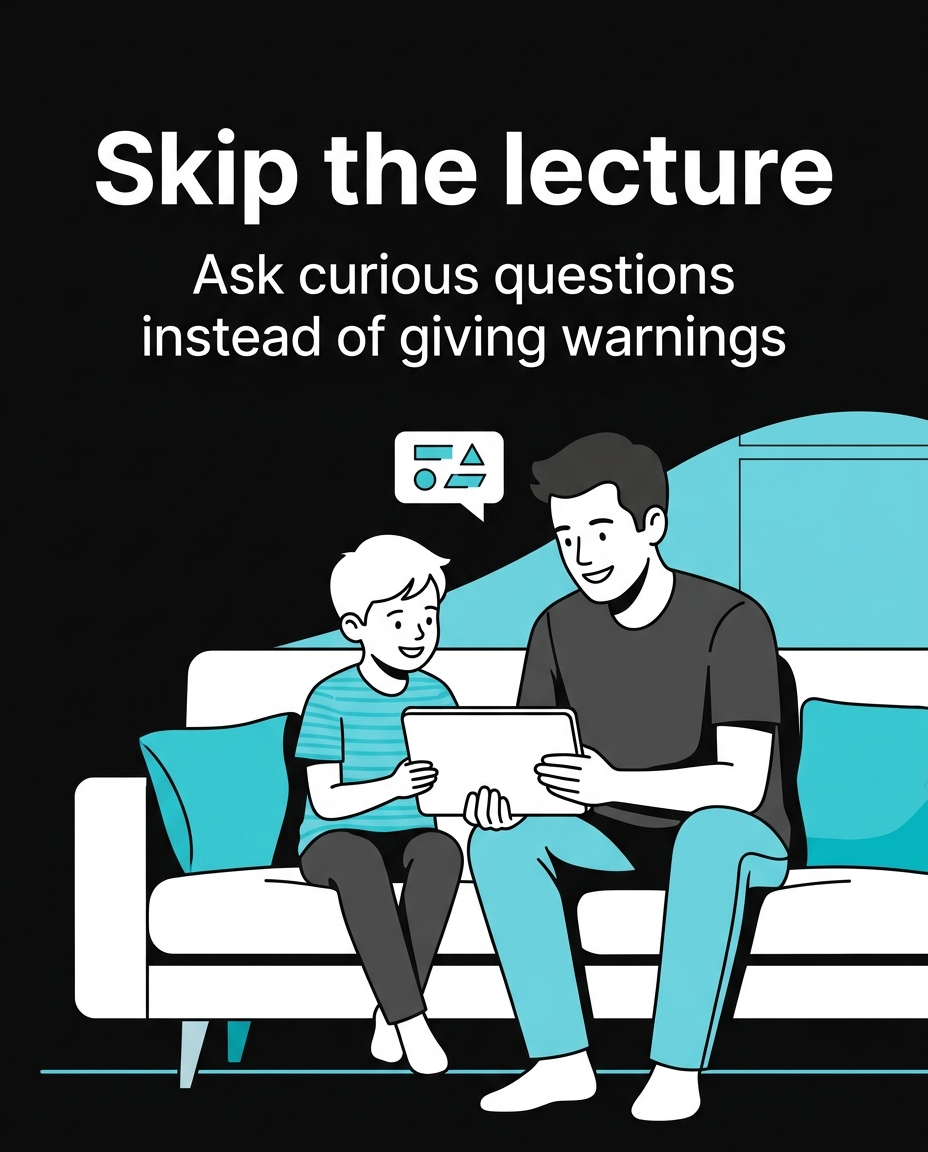
You don’t need a lecture. A short, casual conversation works better. Try: “Has anyone online ever asked you to keep something secret from me?” or “What would you do if someone in your game started asking where you live?” These specific, scenario-based questions get real answers, while “are you being safe online?” almost always gets a shrug and “yeah, I’m fine.”
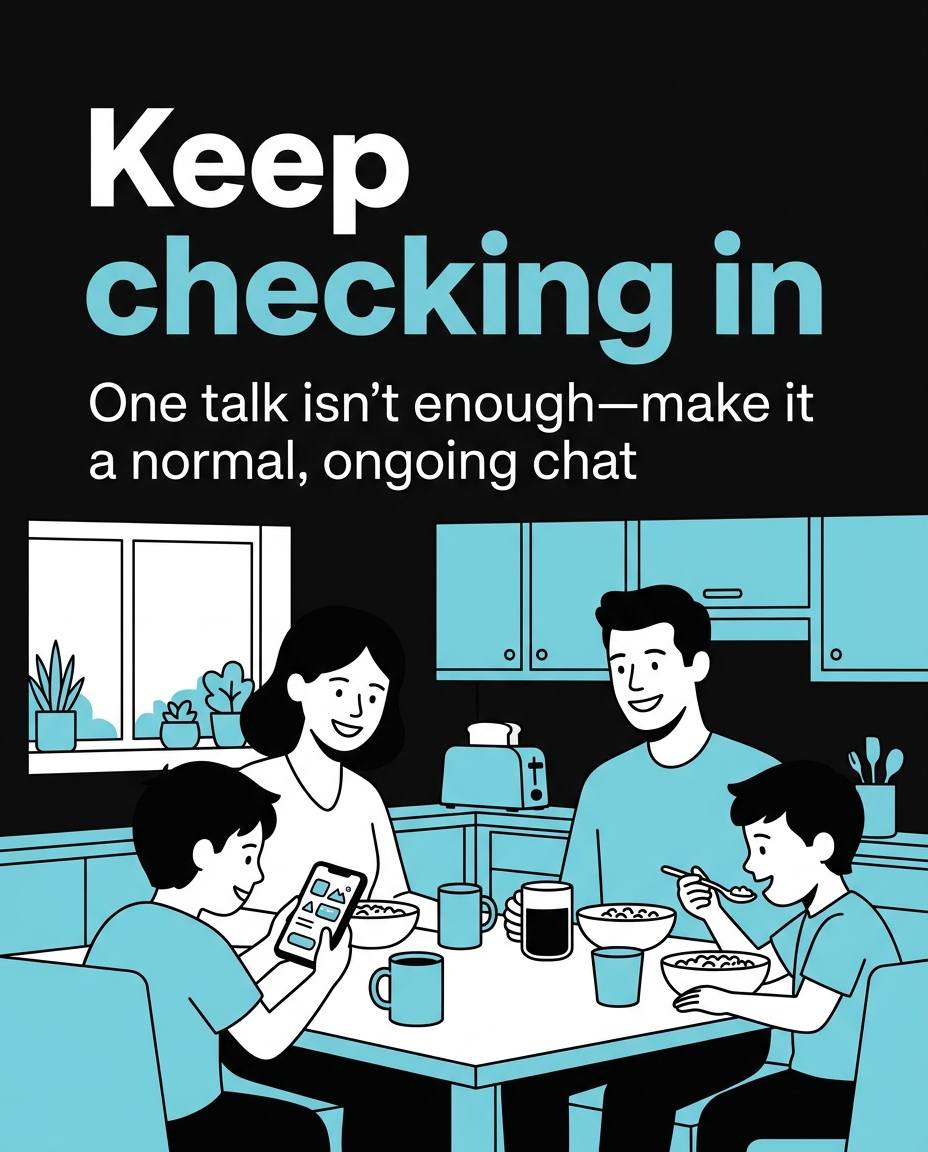
Keep the conversation going as an ongoing habit, not a one-time talk. Kids’ online worlds shift every few months — a new app, a new server, a new “friend” — and the strangers adapting to reach them shift just as fast.
Want to try it out? 🚀
- 🎬 Sample lesson: Free trial
- 📋 Full syllabus: View the program
- 🎓 Enroll & details: Cyber School courses
The International Cyber School Program (Grades 4–9): live online, globally recognized certifications, from fundamentals to CTF.
Frequently Asked Questions
At what age should I start talking to my child about online strangers?
As soon as they have access to any internet-connected device with messaging or chat features — often by age 7 or 8 for gaming platforms like Roblox. Adjust the depth of the conversation to their age, but start early rather than waiting until they have social media.
What should I do if I discover my child has been talking to a stranger who asked for photos?
Stay calm and avoid punishing your child, since this can stop them from reporting future incidents. Save all messages and screenshots without deleting the conversation, then report the account to the platform and, if photos were requested or shared, contact the CyberTipline at CyberTipline.org or local law enforcement.
Are parental control apps enough to keep my child safe from online strangers?
No. Parental controls reduce risk but can’t replace conversation — determined groomers often move kids to unmonitored apps specifically to avoid detection. Controls work best combined with an ongoing, trust-based dialogue where your child feels safe reporting anything unusual.