

Every day, security teams wake up to new vulnerability disclosures, patch advisories, and vendor bulletins. For professionals, the language of this world is built on two acronyms: CVE and CVSS scores. Understanding how they work — and, more importantly, their limits — is the difference between a patch program that actually reduces risk and one that just generates paperwork.
What a CVE Actually Is
CVE stands for Common Vulnerabilities and Exposures. It’s a standardized naming system, maintained by MITRE (with funding from the U.S. Department of Homeland Security), that assigns a unique identifier to a publicly known cybersecurity flaw. A CVE ID looks like this: CVE-2021-44228 — the identifier for Log4Shell, the critical Apache Log4j remote code execution flaw disclosed in December 2021.
The value of a CVE is not the score attached to it — it’s the fact that every vendor, researcher, and security tool refers to the same flaw using the same ID. Without that shared reference, a Microsoft advisory, a Tenable scan report, and a Reddit thread about “that log4j thing” would have no common language. CVE gives vulnerability management a shared vocabulary across an entire global industry.
As of 2024, MITRE and its partner CVE Numbering Authorities (CNAs) — which include Microsoft, Google, Red Hat, and dozens of other vendors — publish more than 25,000 new CVEs per year, up from roughly 8,000 per year a decade ago. That volume alone is why prioritization tools like CVSS exist: no team can patch everything immediately.

What CVSS Scores Measure
CVSS — the Common Vulnerability Scoring System — is the numeric severity rating attached to a CVE, on a scale from 0.0 to 10.0. It’s maintained by FIRST.org (Forum of Incident Response and Security Teams) and is currently in version 3.1, with version 4.0 rolling out across advisories since late 2023.
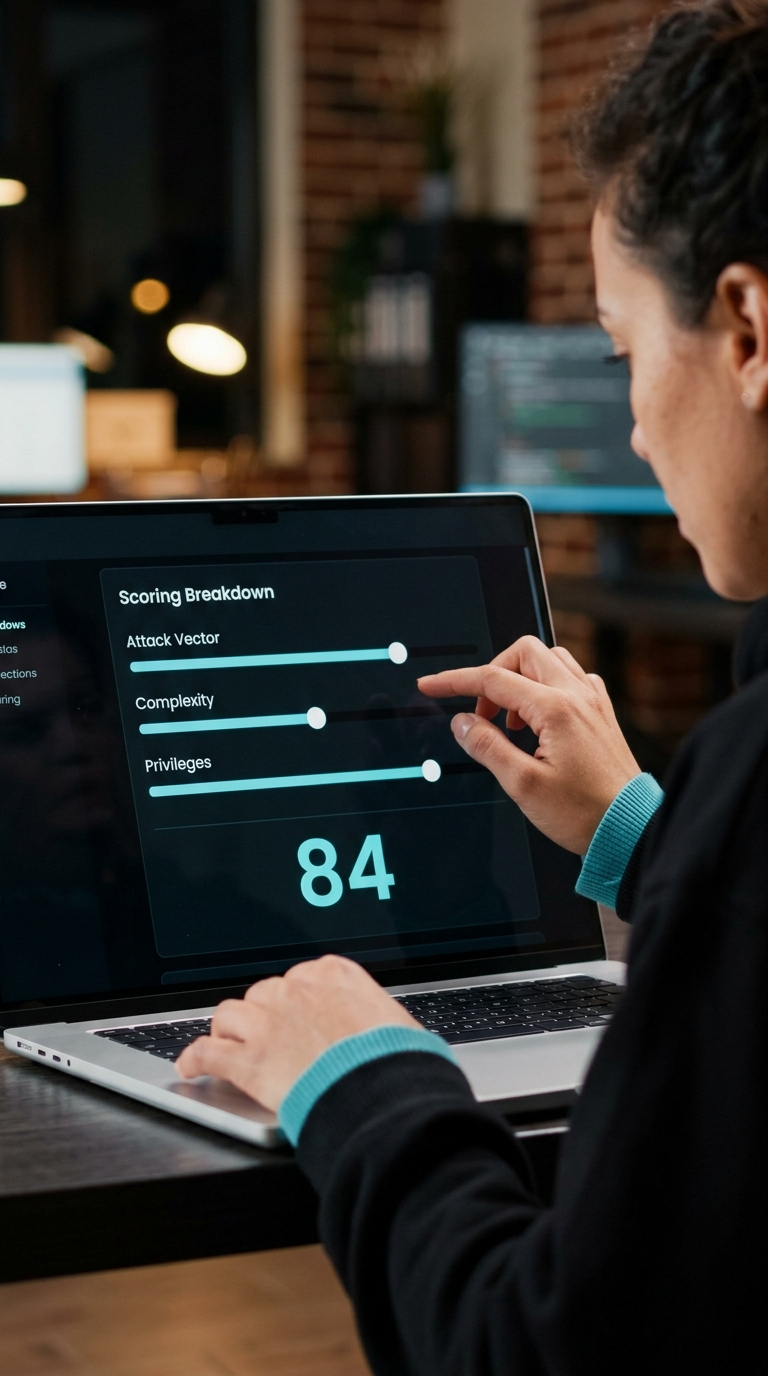
A CVSS score is built from measurable factors, not gut feeling. The base score combines:
- Attack Vector — can the flaw be exploited over the network, or does it require local/physical access?
- Attack Complexity — does exploitation require special conditions, or does it work reliably every time?
- Privileges Required — does the attacker need to already be logged in?
- User Interaction — does a victim need to click something?
- Impact — what happens to confidentiality, integrity, and availability if exploited?
Log4Shell (CVE-2021-44228) scored a 10.0 — the maximum possible — because it was network-exploitable, required no authentication, no user interaction, and led to full remote code execution. That combination is rare; most critical CVEs land between 9.0 and 9.8. By comparison, CVE-2014-0160 (Heartbleed, the OpenSSL memory-leak bug) scored 7.5 — serious, but rated lower because it leaked data rather than granting direct code execution.
Severity Bands and What They Mean Operationally
CVSS scores map to four qualitative bands: Low (0.1–3.9), Medium (4.0–6.9), High (7.0–8.9), and Critical (9.0–10.0). Most enterprise patch policies use these bands to set SLAs. A common real-world policy, similar to what’s outlined in CISA’s Binding Operational Directive 22-01, requires:
- Critical (9.0–10.0): patch within 15 days, sometimes 24–72 hours for actively exploited flaws
- High (7.0–8.9): patch within 30 days
- Medium/Low: patch within a standard quarterly cycle
CISA’s Known Exploited Vulnerabilities (KEV) catalog, launched in 2021, adds a second dimension: it doesn’t matter what a flaw scores if it’s already being used in active attacks. CVE-2023-4966 (“Citrix Bleed,” a session-hijacking flaw in Citrix NetScaler) scored a 7.5 — technically “High,” not “Critical” — yet it was added to the KEV list within weeks because ransomware groups including LockBit were actively exploiting it against Boeing, Comcast Xfinity, and DP World. Relying on CVSS score alone would have left that patch in a 30-day queue while active breaches were happening.
Where CVSS Falls Short
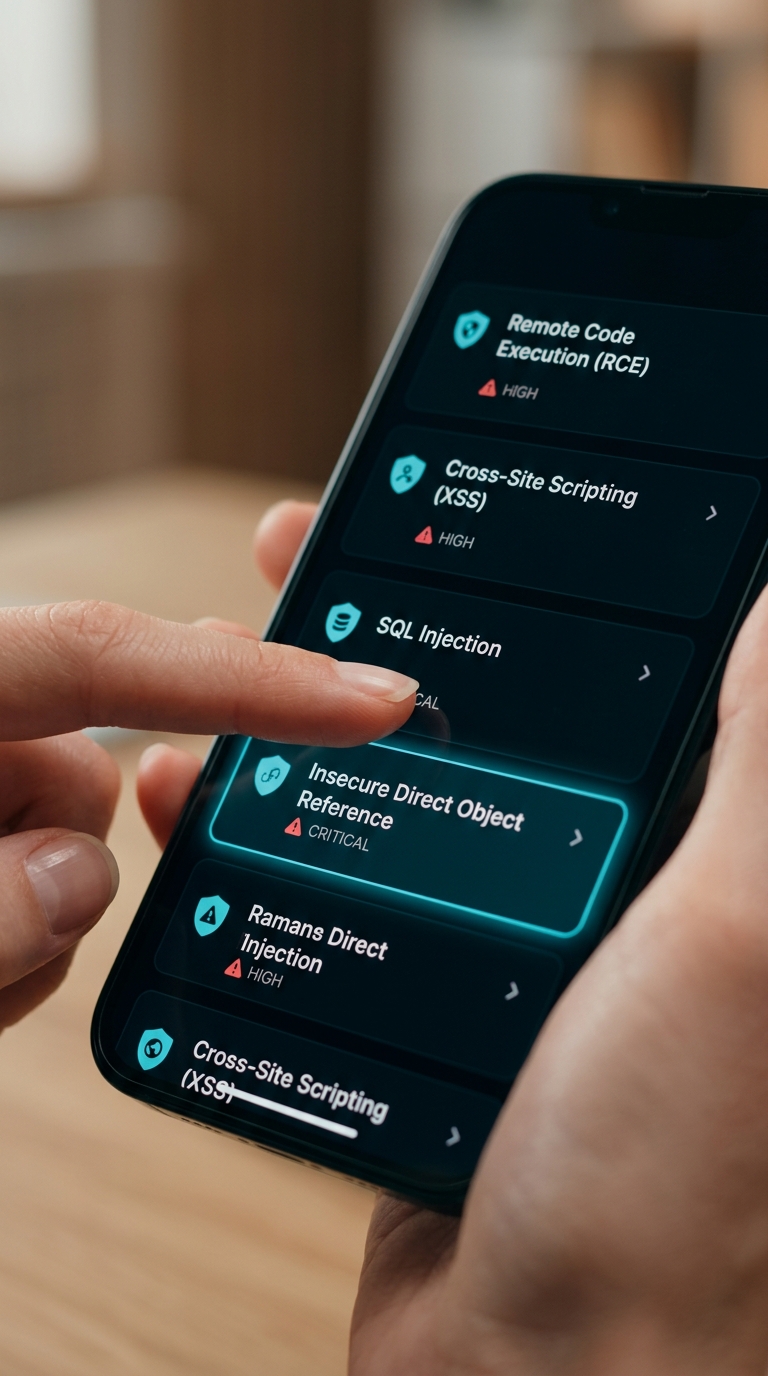
CVSS measures theoretical severity, not real-world exploitability or business context. Three limitations matter most for professionals:
1. It ignores exploitation reality. A 9.8 CVE with no public proof-of-concept and complex prerequisites may sit unexploited for years. Meanwhile, a 6.5 “Medium” flaw with a public Metasploit module can be weaponized by a script kiddie within hours of disclosure.
2. It ignores asset context. A critical Windows Server vulnerability scores the same 9.8 whether it’s on an internet-facing domain controller or an air-gapped test VM. Risk-based vulnerability management (RBVM) platforms like Tenable.io and Rapid7 InsightVM layer exploitability data (via EPSS — the Exploit Prediction Scoring System) and asset criticality on top of raw CVSS to produce a more actionable priority order.
3. Version differences cause confusion. CVSS v2, v3.1, and v4.0 score the same flaw differently. CVE-2017-5638 (the Apache Struts flaw behind the 2017 Equifax breach, which exposed the personal data of 147 million people) scored 10.0 under CVSS v2 but 9.8 under v3 due to scoring formula changes. Teams comparing scores across systems need to check which CVSS version is in use.
A Practical Prioritization Example
Consider a mid-size company running a monthly vulnerability scan that returns 40 new CVEs. A naive approach patches by CVSS score alone, starting with every 9.0+. A mature approach cross-references three data points: the CVSS base score, whether the CVE appears in CISA’s KEV catalog, and the EPSS probability-of-exploitation score (published daily by FIRST.org, ranging 0–1). A CVE with a 9.1 CVSS score but a 0.02 EPSS probability (2% chance of exploitation in the next 30 days) may reasonably wait behind a 7.2 CVSS CVE sitting at 0.94 EPSS (94% probability) and already on the KEV list. This layered approach is what SOC teams at organizations like Mandiant and CrowdStrike use to translate thousands of raw alerts into a ranked, defensible action list.
Why This Matters for Every Security Career Path
Whether you’re heading toward a SOC analyst role, penetration testing, or GRC (governance, risk, and compliance), fluency in CVE/CVSS is foundational. Job postings for vulnerability management analysts routinely list “CVSS scoring” and “CVE triage” as required skills, and certifications like CompTIA Security+, CySA+, and (ISC)² CISSP all test this material directly. Understanding the numbers is step one; understanding when to override them with real-world context is what separates a junior analyst from a trusted risk advisor.
Want to try it out? 🚀
- 🎬 Sample lesson: Free trial
- 📋 Full syllabus: View the program
- 🎓 Enroll & details: Cyber School courses
CSRP — Cyber Security Responder & Practitioner. Hands-on labs, job-ready skills, industry certifications for career-changers and pros.
Frequently Asked Questions
What’s the difference between a CVE and a CVSS score?
A CVE is a unique identifier for a specific publicly disclosed vulnerability (like CVE-2021-44228 for Log4Shell). A CVSS score is a separate numeric rating, from 0.0 to 10.0, that measures how severe that vulnerability is based on factors like exploitability and impact.
Does a high CVSS score always mean a vulnerability should be patched first?
Not necessarily. CVSS measures theoretical severity, not real-world exploitation. A lower-scored CVE that’s on CISA’s Known Exploited Vulnerabilities list or has a high EPSS (Exploit Prediction Scoring System) probability may pose more immediate risk than an unexploited 9.8.
Who assigns CVE numbers and CVSS scores?
CVE identifiers are assigned by MITRE and a network of CVE Numbering Authorities, including major vendors like Microsoft and Red Hat. CVSS base scores are typically calculated by the vendor or the National Vulnerability Database (NVD) using the standardized formula maintained by FIRST.org.