Every day, thousands of alerts flash across the screens of Security Operations Centers around the world — and someone has to decide which ones matter. That someone is the SOC analyst. Far from the Hollywood image of a hacker in a hoodie racing against a countdown clock, the real job is methodical, detail-driven, and deeply investigative. If you’ve ever wondered what “SOC analyst daily tasks” actually look like on a real shift, this article breaks it down hour by hour with concrete scenarios.
7:00 AM — Shift Handoff and Triage Queue Review
A SOC analyst’s day rarely starts with a blank slate. It starts with a handoff log from the overnight team: “Ticket #4471 — repeated failed VPN logins from Bucharest, escalated to Tier 2, awaiting IP reputation check.” The analyst reviews the SIEM (Security Information and Event Management) dashboard — often Splunk, Microsoft Sentinel, or IBM QRadar — where the previous shift left 60 to 200 open alerts, depending on the organization’s size.
A mid-size financial services company, for example, might generate 12,000 raw security events per hour across firewalls, endpoint detection tools, and cloud logs. After automated correlation rules filter that down, the analyst is left with maybe 40–70 alerts that need human eyes. The first task of the day is triage: sorting by severity, asset criticality, and whether the same signature has appeared before.
8:30 AM — Investigating a Real Alert: The Phishing Click
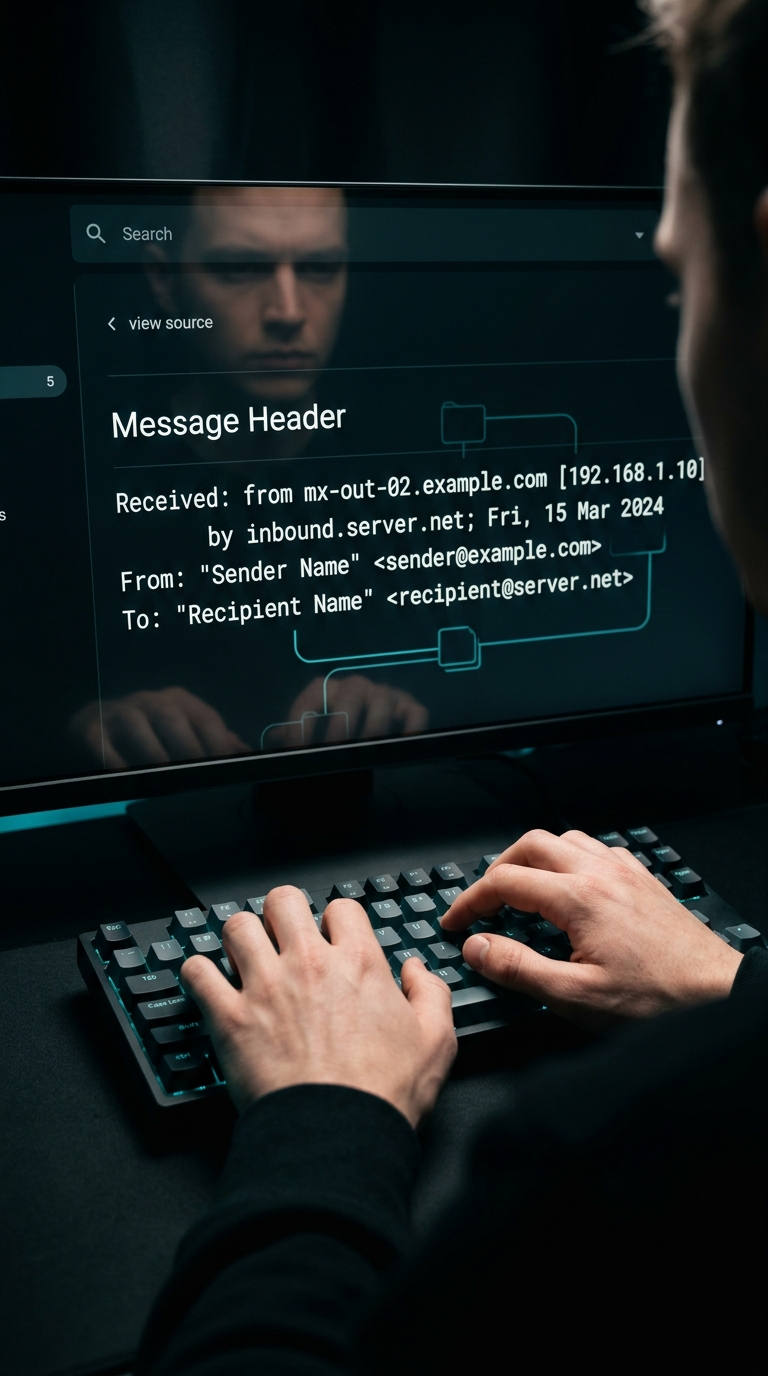
Here’s a concrete example. An alert fires: “User jsmith@company.com clicked a link in email flagged by Proofpoint as malicious, sender domain registered 4 days ago.” The analyst doesn’t just close the ticket — they open the email header, check the sender’s SPF/DKIM/DMARC results, and pull the URL into a sandbox tool like Any.Run or Joe Sandbox to see what it actually does when detonated.
In this case, the payload turns out to be a credential-harvesting page mimicking a Microsoft 365 login. The analyst checks whether jsmith actually entered credentials (using proxy logs — in this scenario, yes, at 8:41 AM), then immediately escalates: forcing a password reset, revoking active sessions in Azure AD, and checking for any anomalous logins from new geolocations in the last hour. They find one — a login attempt from Lagos, Nigeria, nine minutes after the credential entry, blocked by conditional access policy. That single alert, if missed, could have led to a business email compromise (BEC) incident costing tens of thousands of dollars, based on the FBI’s IC3 report that BEC scams cost US businesses over $2.9 billion in a single recent year.
10:00 AM — Threat Hunting and Log Correlation
Not every task is alert-driven. Many SOCs allocate blocks of time for proactive threat hunting — searching for indicators of compromise (IOCs) that automated rules might miss. An analyst might take a known IOC from a recent CISA advisory (for example, a hash associated with a Cobalt Strike beacon) and run a retroactive search across 30 days of endpoint logs using a tool like CrowdStrike Falcon or Microsoft Defender for Endpoint.
In one real-world-style scenario, a hunt for unusual PowerShell activity turns up a script running with base64-encoded arguments on three machines in the accounting department — a pattern consistent with living-off-the-land (LOLBins) techniques used in ransomware precursors. The analyst isolates the three endpoints, captures a memory dump for forensics, and hands the case to the incident response team, all before lunch.
12:30 PM — Documentation: The Unseen Half of the Job
SOC work is at least 40% writing, not clicking. Every investigation needs a clear record: what was seen, what was checked, what conclusion was reached, and why. Analysts write up incident tickets with timestamps down to the minute, because these records often become evidence in later audits, insurance claims, or even court proceedings if the incident escalates.
A well-written ticket for the phishing case above might read: “08:36 — Alert triggered by Proofpoint TAP. 08:41 — User confirmed to have entered credentials via proxy log review. 08:44 — Password reset forced via Azure AD PowerShell. 08:50 — Login attempt from 105.112.x.x (Lagos, NG) blocked by Conditional Access. Recommend MFA enforcement review for all finance department accounts.” This level of detail is what separates a junior analyst from a senior one — and it’s exactly what auditors look for during SOC 2 or ISO 27001 reviews.
2:00 PM — False Positives and Alert Fatigue
A significant, often underappreciated part of SOC analyst daily tasks is dealing with false positives. Industry research from IBM’s Cost of a Data Breach report has repeatedly noted that organizations with immature SOC processes see false positive rates above 50%. An analyst might spend 45 minutes investigating an alert about “unusual outbound traffic to a rare country” only to discover it’s a legitimate SaaS vendor’s CDN endpoint that simply wasn’t yet whitelisted.
This is tedious but critical work — because tuning out real false positives (by adjusting SIEM correlation rules) is what keeps the queue manageable for the next shift. A good analyst doesn’t just close the ticket; they submit a rule-tuning request so the same noise doesn’t reappear at 3 AM for someone else to re-investigate from scratch.
3:30 PM — Cross-Team Collaboration
SOC analysts rarely work in isolation. A mid-severity alert about a misconfigured S3 bucket exposing customer data (a scenario disturbingly common — Amazon has flagged thousands of publicly accessible buckets across industries) requires immediate coordination with the cloud engineering team. The analyst joins a 15-minute call, explains the exposure window (in one real case, 6 hours before detection), and works with engineering to lock down the bucket’s ACL settings while legal is looped in to assess breach notification obligations under state laws like the California Consumer Privacy Act (CCPA).

5:00 PM — Shift Wrap-Up and Metrics Reporting
Before the day ends, analysts update key performance metrics that SOC managers track closely: Mean Time to Detect (MTTD) and Mean Time to Respond (MTTR). A strong SOC aims for an MTTD under 10 minutes for critical alerts and an MTTR under 60 minutes for containment. The analyst logs today’s numbers — in this case, the phishing incident was detected in 2 minutes and contained in 13 — and flags any tickets that need to roll over to the next shift with clear context, closing the loop that started the morning’s handoff.
Why This Work Matters
The daily grind of a SOC analyst — triaging alerts, chasing down a single suspicious login, writing precise documentation, tuning out noise — is what stands between a minor incident and a headline-making breach. It’s not glamorous, but it’s the discipline of consistent, careful investigation that protects organizations of every size, from a 50-person startup to a Fortune 500 bank.
Want to try it out? 🚀
- 🎬 Sample lesson: Free trial
- 📋 Full syllabus: View the program
- 🎓 Enroll & details: Cyber School courses
CSRP — Cyber Security Responder & Practitioner. Hands-on labs, job-ready skills, industry certifications for career-changers and pros.
Frequently Asked Questions
How many alerts does a SOC analyst typically review in a single shift?
It varies widely by organization, but a mid-size company’s SIEM might generate thousands of raw events per hour, which correlation rules narrow down to roughly 40–70 alerts that actually need human review during an 8-hour shift.
What tools do SOC analysts use most often day to day?
Common tools include SIEM platforms (Splunk, Microsoft Sentinel, IBM QRadar), endpoint detection and response tools (CrowdStrike Falcon, Microsoft Defender for Endpoint), sandbox analysis tools (Any.Run, Joe Sandbox), and identity platforms like Azure AD for session and access management.
Is a SOC analyst’s job mostly technical investigation or also documentation?
Both, and documentation matters more than most people expect — often close to 40% of the role. Detailed, timestamped incident tickets are essential for audits, compliance reviews (like SOC 2 or ISO 27001), and any legal follow-up after an incident.