

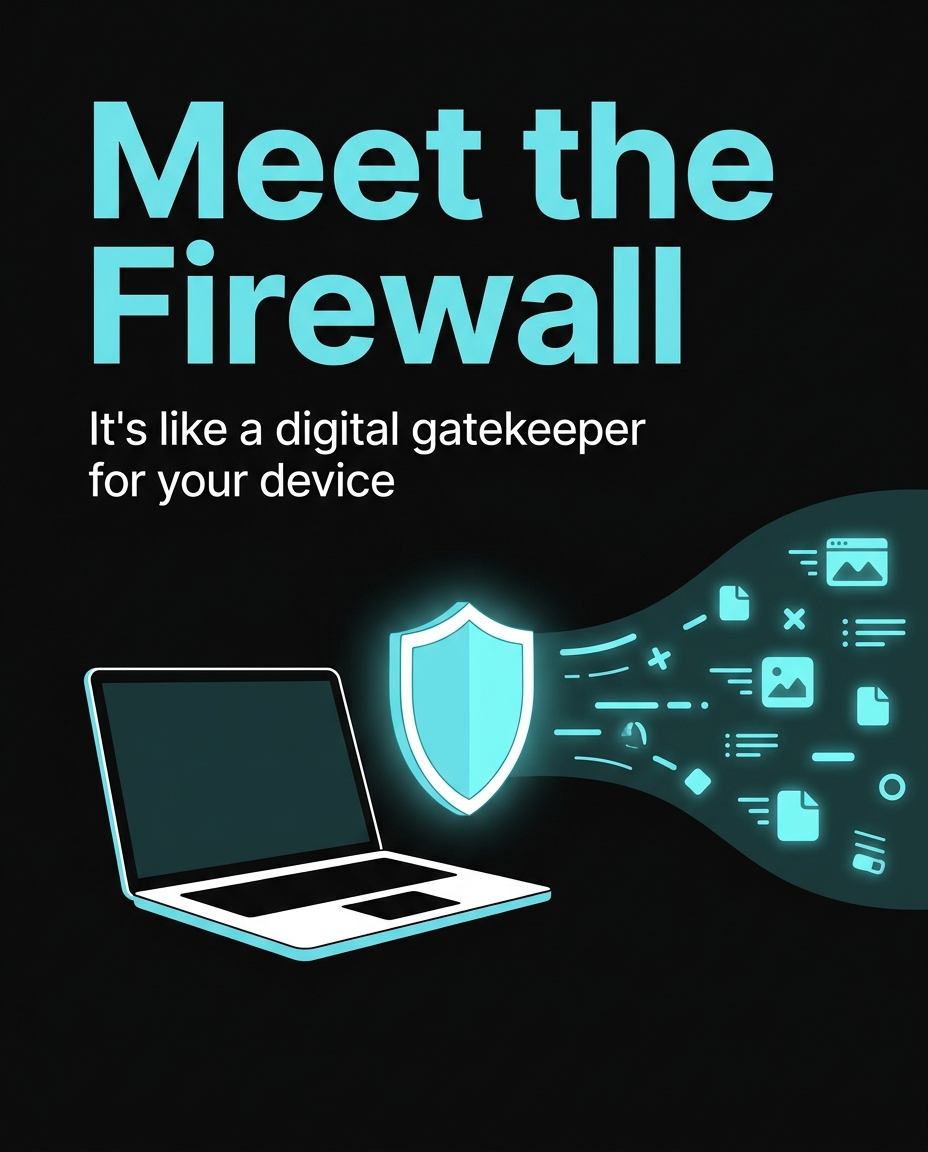
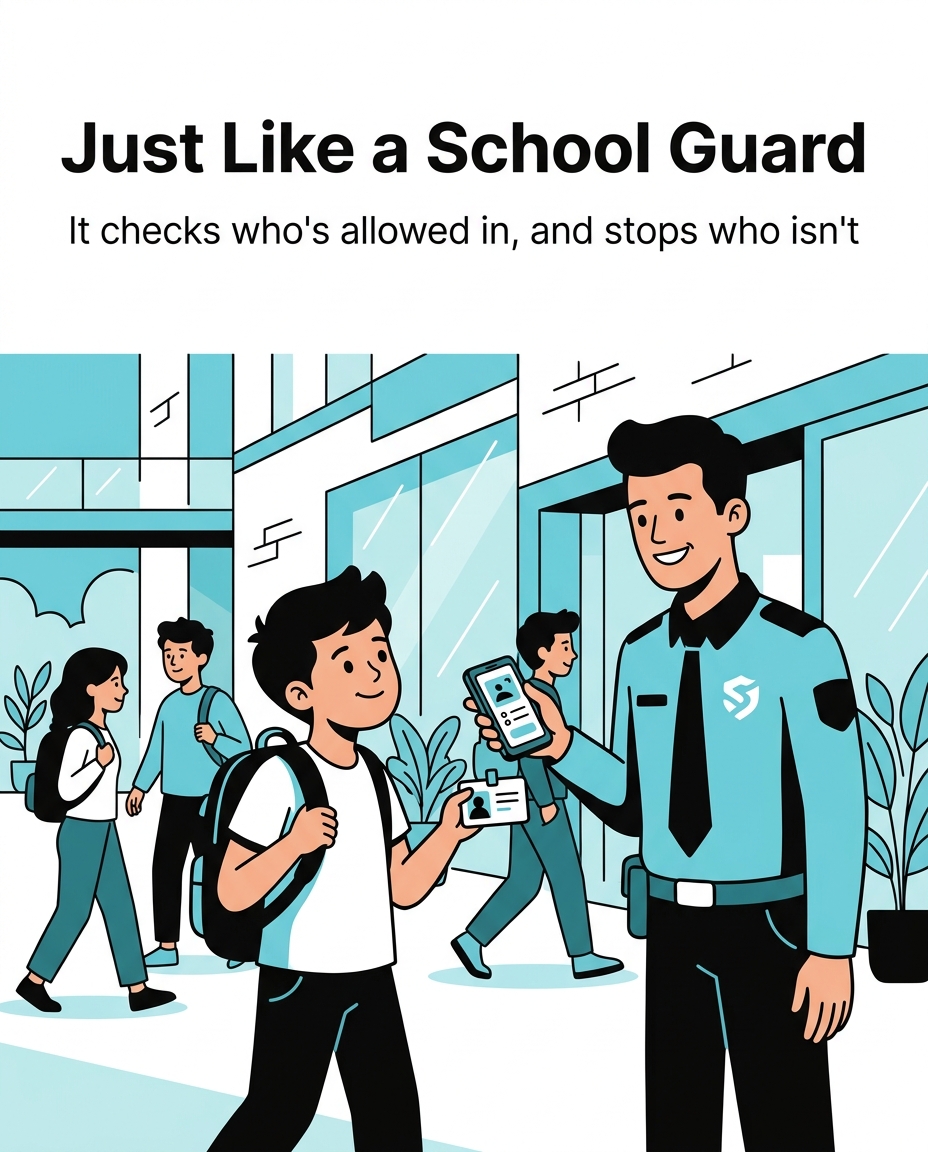
Have you ever seen a security guard standing at the door of a school, checking who comes in and who goes out? A firewall works a lot like that guard — except instead of protecting a building, it protects your computer, tablet, or the Wi-Fi network at home. So what does a firewall do, exactly? Let’s break it down like real cyber detectives.
What Does a Firewall Do, in Simple Words?
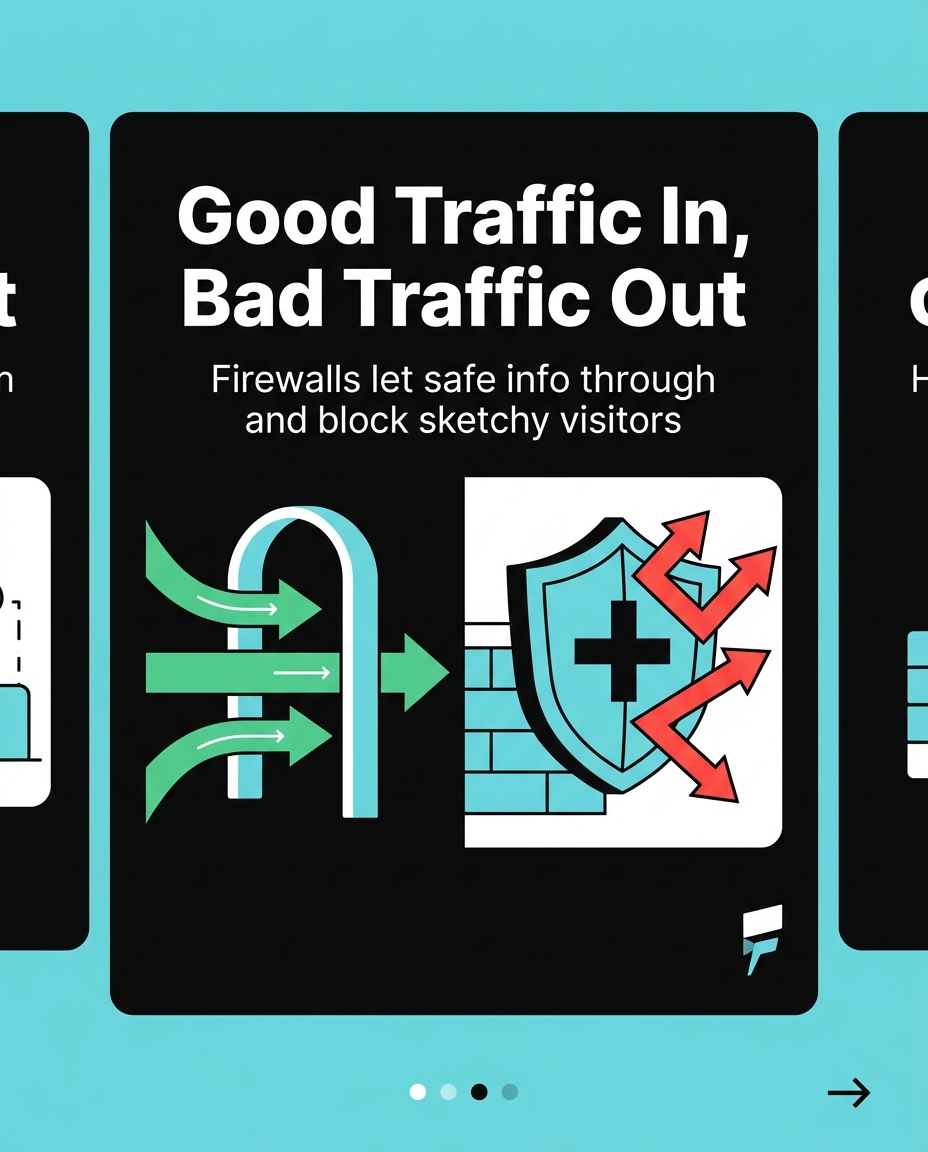
A firewall is a piece of software or hardware that watches the information traveling in and out of your device or network. Every time you open a website, play an online game, or send a message, tiny packets of data move back and forth between your device and the internet. A firewall checks each packet and decides: “Is this safe to let through, or should I block it?”
Think of it like a mail sorter at a giant post office. Thousands of letters (data packets) arrive every second. The firewall reads the address, checks who sent it, and decides whether it belongs to a trusted sender or looks suspicious. If it looks like trouble — say, a letter with no return address trying to sneak into a locked building — the firewall tosses it out before it ever reaches you.
A Real Example: Blocking a Sneaky Game Download
Let’s say a 12-year-old named Maya is playing a free online game. A pop-up appears saying, “Click here to unlock 500 free coins!” If Maya clicks it, the link might try to secretly connect her computer to a server run by a hacker, without her even knowing.
Here’s where a firewall steps in. Many home routers and antivirus programs — like the built-in Windows Defender Firewall or the firewall inside a router from companies such as Netgear or TP-Link — automatically block connections to servers that are known to be dangerous. In 2023, cybersecurity researchers at Kaspersky reported blocking more than 437 million malicious website connection attempts worldwide in a single year. A firewall is one of the main tools that made those blocks possible, stopping the connection before the harmful file ever downloaded onto someone’s device.
Firewalls at School: A Real-World Case
Schools use firewalls too — on a much bigger scale. Imagine a school with 800 students, all connected to the same Wi-Fi network during computer class. Without protection, one infected laptop could spread malware to every other device on that network in minutes.
That’s why school IT teams install network firewalls, like Cisco Meraki or Fortinet devices, at the “front door” of their entire network. These firewalls create rules such as:
- Block any device trying to connect to a known hacker server.
- Stop large amounts of data from suddenly leaving the network at 2 a.m. (a sign something might be wrong).
- Allow normal traffic, like students using Google Classroom or watching an approved YouTube video for class.
In one real case reported by a US school district in Ohio in 2021, a firewall detected and blocked an attempted ransomware attack that started from a single infected email attachment. Because the firewall flagged unusual outgoing traffic and shut the connection down, the ransomware never had the chance to lock up the school’s entire computer system — something that has cost other districts hundreds of thousands of dollars to fix.
How a Firewall “Decides” What to Block
Firewalls don’t just guess. They follow specific rules, kind of like a rulebook a guard might carry. Some common rules include:
- Address checking: Is this connection coming from a known safe website or a suspicious one?
- Port control: Data travels through numbered “doors” called ports. A firewall might close ports that hackers commonly use, like port 23, which was historically used in old, insecure remote-access attacks.
- Pattern detection: If a firewall sees the same device trying to connect 500 times in one minute, that looks like an attack, not a normal person browsing — so it blocks it automatically.
This is similar to a bouncer at a concert who says, “Sorry, no bags allowed,” or “You already came in and left — you can’t scan this ticket twice.” The firewall applies a rule instantly, without needing to ask a human first.
Firewalls vs. Antivirus: What’s the Difference?
Kids sometimes think firewalls and antivirus software are the same thing, but they do different jobs. An antivirus scans files already on your device to check if they’re infected. A firewall works earlier — it tries to stop bad traffic from ever reaching your device in the first place.
Picture it this way: the firewall is the security guard at the school entrance, checking backpacks before anyone walks in. The antivirus is like a teacher who checks inside the classroom, just in case something sneaky already got past the door. Both are important, and most home and school networks use them together.
Why This Matters Even If You’re Just Gaming or Chatting
You don’t need to be a bank or a big company to be a target. In fact, a 2022 report by the security company Norton found that kids and teens were increasingly targeted through gaming platforms, where attackers pretend to offer free items, skins, or currency to trick players into clicking dangerous links.
A properly set-up firewall — whether it’s built into your router, your laptop, or your gaming console — quietly blocks thousands of these attempts every year without you even noticing. That’s the real answer to “what does a firewall do”: it’s the invisible guard working 24/7, so you can play, chat, and learn online with a lot less risk.
A Quick Way to Check Your Own Firewall
On most Windows computers, you can check if your firewall is active by searching “Windows Defender Firewall” in the search bar and confirming it says “On” for your network. On a Mac, it’s under System Settings > Network > Firewall. It only takes 30 seconds, and it’s a great habit for any young cyber defender to build.
Want to try it out? 🚀
- 🎬 Sample lesson: Free trial
- 📋 Full syllabus: View the program
- 🎓 Enroll & details: Cyber School courses
The International Cyber School Program (Grades 4–9): live online, globally recognized certifications, from fundamentals to CTF.
Frequently Asked Questions
What does a firewall actually block?
A firewall blocks unsafe or unwanted data connections — like traffic from known hacker servers, repeated suspicious login attempts, or malware trying to “call home” to a hacker’s system — while allowing normal, safe traffic like websites and games to pass through.
Is a firewall the same as antivirus software?
No. A firewall controls what data is allowed to enter or leave your device or network, acting like a guard at the door. Antivirus software scans files already on your device to catch anything harmful that got inside.
Do I need a firewall if I only use my phone or tablet?
Yes. Most phones and tablets have a built-in firewall, and your home Wi-Fi router usually has one too. Together they filter traffic before it even reaches your apps, which is especially important since kids are frequently targeted through games and messaging apps.