
When the word “hacker” comes up, most kids — and plenty of parents — picture a figure in a black hoodie, sitting in a dark room in front of a green screen, typing at impossible speed. That’s the image movies love to sell, but it’s almost completely wrong. In reality, a hacker is simply someone who deeply understands how digital systems work — and that knowledge can be used to break in, or to protect. Let’s break it down.
What a hacker actually is
Being a hacker isn’t an official job title or a college degree — it’s more of a mindset. It’s someone who is naturally curious: they aren’t satisfied that an app “just works,” they want to understand why it works, what happens behind the scenes, and where there might be gaps. For example: a kid who takes apart an old remote control to see how it sends signals to the TV is doing the exact same mental move a hacker makes with a website or an online game. The question “how does this work on the inside?” is the seed of all hacking.

White hat vs. black hat — not all hackers are the same
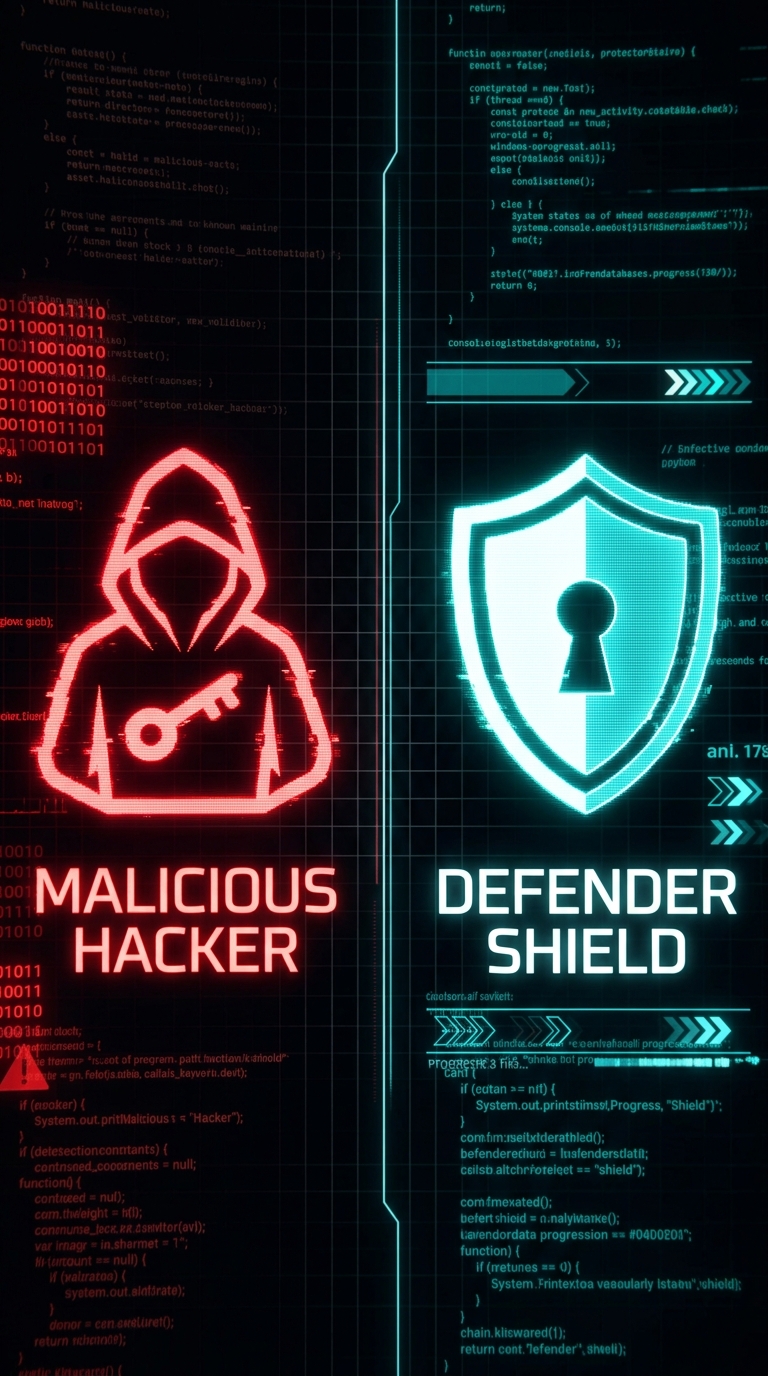
In the cyber world there’s a clear distinction between two kinds of hackers, named after hat color (an idea borrowed from old western movies, where the robbers wore black hats and the sheriffs wore white):
- Black hat: breaks into systems without permission, usually to steal data or money, or cause damage. This is fully criminal activity.
- White hat: uses the exact same expertise, but legally and with permission — hired by companies to find their weaknesses before the bad guys do.
A real-world example: giant companies like Google, Meta and Apple run “bug bounty” programs that pay thousands of dollars to anyone who finds a security hole and reports it responsibly — and quite a few of the finders are teenagers aged 14–16 who learned it as a hobby.
Why good hackers are so in demand today
Almost everything in our lives is now connected to the internet — hospitals, banks, schools, and even games like Minecraft with shared servers. Every one of those systems needs someone who knows how to protect it, which is why demand for good hackers (also called cybersecurity specialists) is at an all-time high. In the U.S. there is a well-documented cybersecurity talent shortage — hundreds of thousands of unfilled roles — and employers are actively looking for exactly this kind of curious, precise, creative problem-solver.
Common myths worth busting
- Myth: “Hackers are always criminals.” Reality: most people who work in hacking today hold completely legitimate jobs — in tech companies, banks, the military and government.
- Myth: “You have to be a math genius to be a hacker.” Reality: the most important skill is curiosity and persistence — the willingness to try again and again until you understand how something works.
- Myth: “Hacking is magic that happens in seconds, like in the movies.” Reality: real (legal, authorized) security testing can take hours or days of patient, methodical work.
How kids learn to be a “white hat” safely
The right way into this world is not to try to “break into” anything real (that’s both illegal and unsafe) — it’s to learn in a controlled environment: how systems are built, how to code, how attackers think, and how to defend. That’s exactly what a structured program does — it channels natural curiosity into real, ethical skill, step by step.
In summary
A hacker is a curious mind that understands how things work. The choice between white hat and black hat is the choice between protecting and harming — and the world needs far more defenders. If your child asks the question “how does this actually work?”, that’s not something to worry about — it’s the first sign of a future cyber defender.
Want to try it out? 🚀
- 🎬 Sample lesson: Free trial
- 📋 Full syllabus: View the program
- 🎓 Enroll & details: Cyber School courses
The International Cyber School Program (Grades 4–9): live online, globally recognized certifications, from fundamentals to CTF.
Frequently Asked Questions
What is a hacker in simple terms?
A hacker is someone who deeply understands how digital systems work. That knowledge can be used to attack (black hat) or to protect (white hat).
Is it bad if my child wants to be a hacker?
Not at all — it usually means they’re curious about how technology works. Channeled into ethical, structured learning, that curiosity becomes a valuable, in-demand career skill.
How does a kid start learning cybersecurity safely?
In a controlled, guided environment — learning how systems work, how to code, and how to defend — never by trying to break into anything real. Structured programs like Cyber School are built exactly for this.