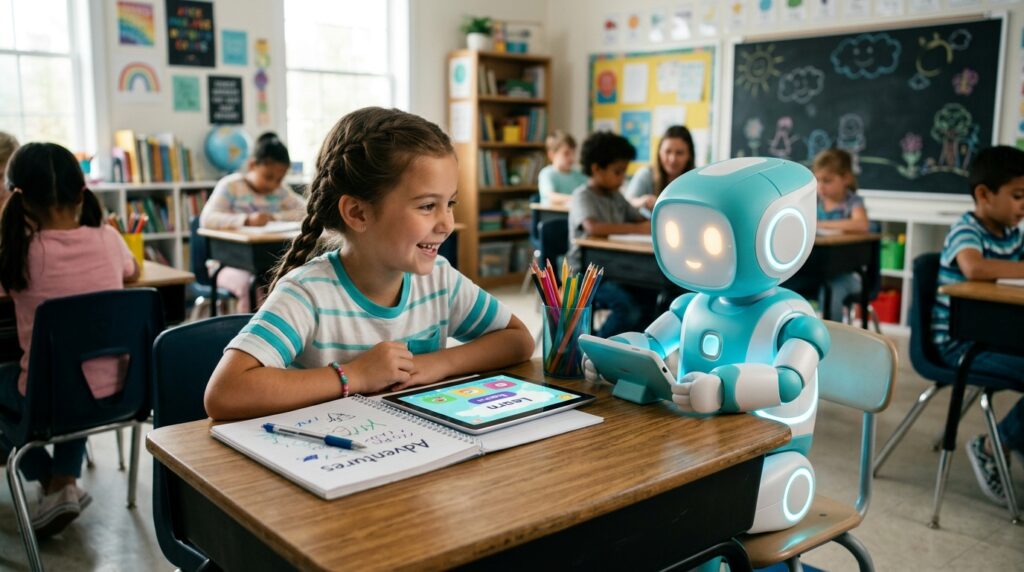
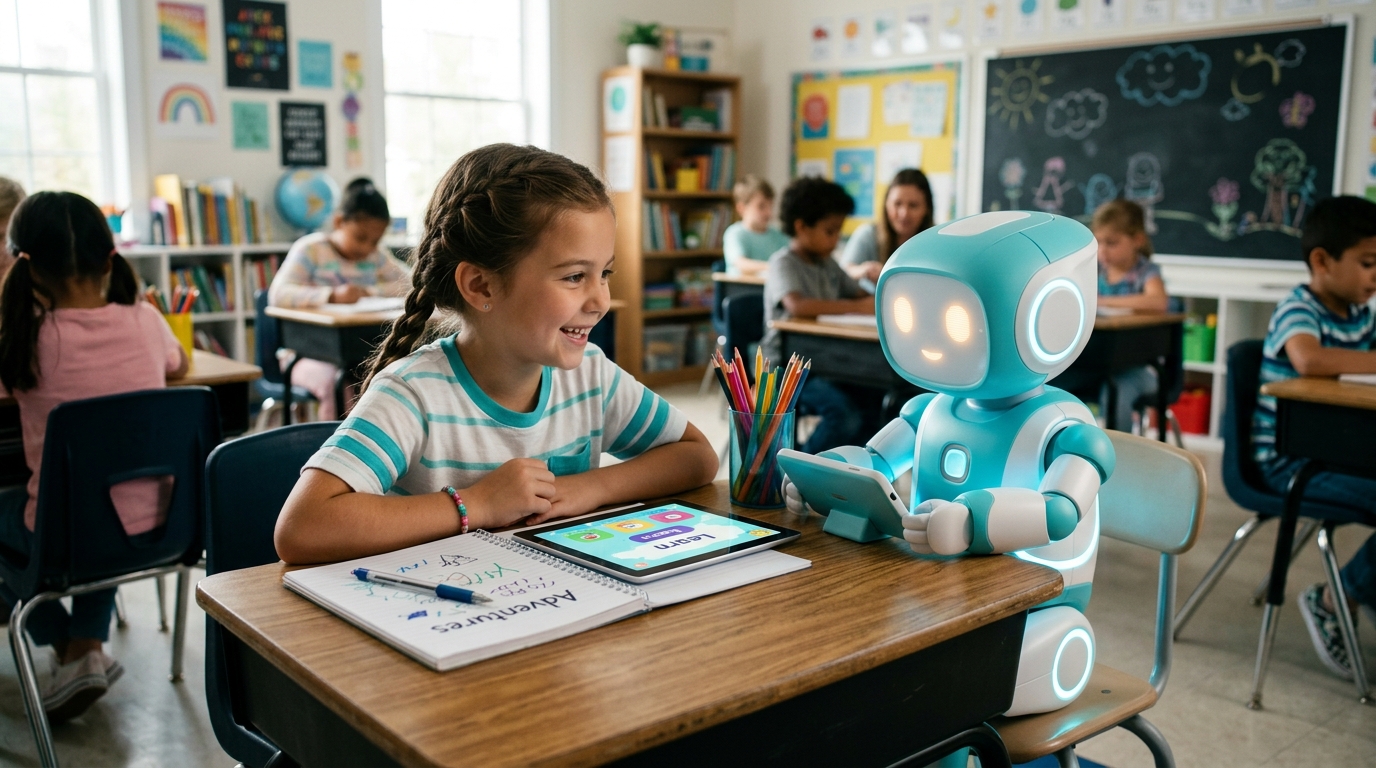
Have you ever asked a smart speaker to play your favorite song, or watched Netflix guess exactly which show you’d love next? That’s Artificial Intelligence, or AI, working behind the scenes! If you’ve ever wondered what is AI for kids really means, you’re in the right place. Let’s break it down in a fun, easy way — no confusing tech talk, just real examples you already know.
What Is AI, Really?
AI stands for Artificial Intelligence. In simple words, it’s when a computer or a machine is taught to think, learn, and make decisions kind of like a human brain does — but using math, data, and patterns instead of feelings or imagination.
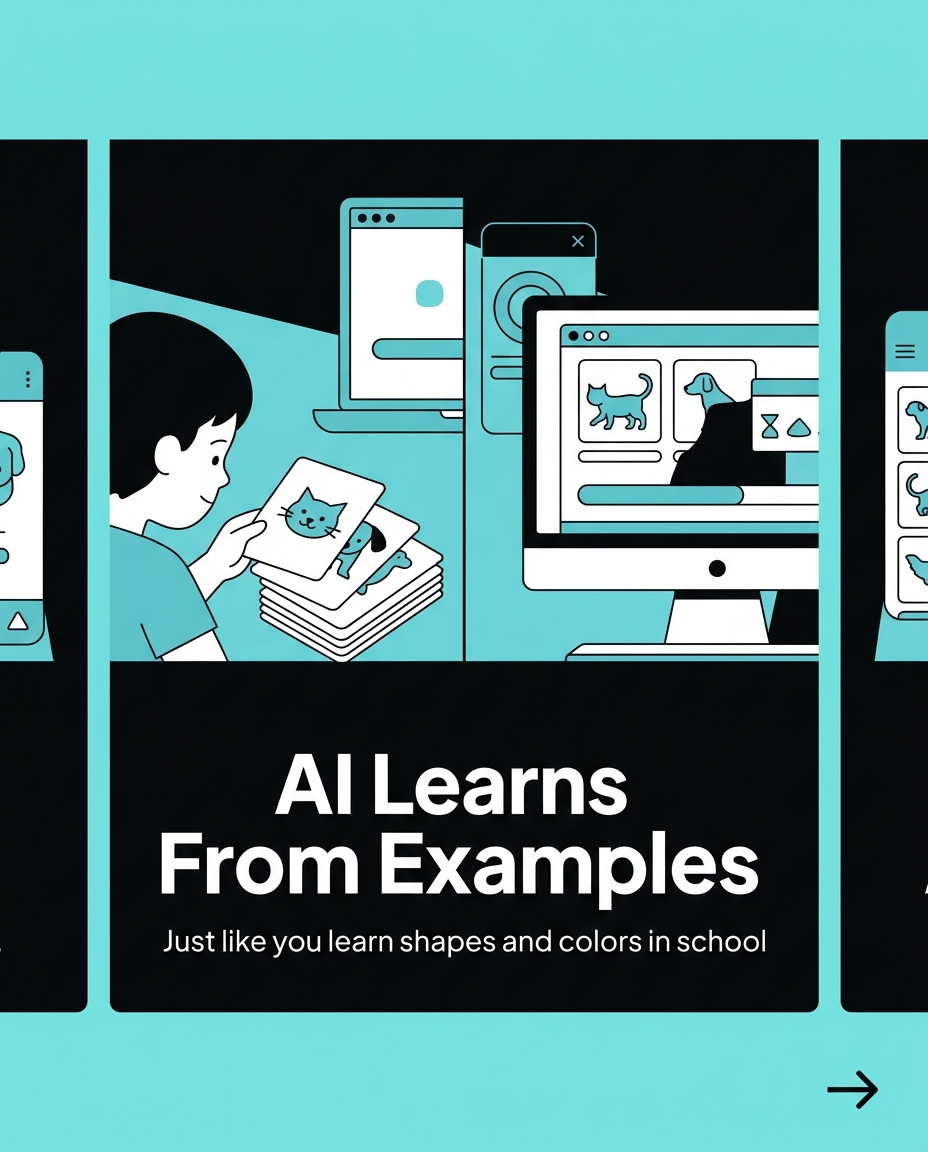
Think about it this way: when you were little, you learned that a red, round fruit is called an “apple” because someone showed you many apples and said the word over and over. AI learns in a very similar way! Except instead of a parent pointing at fruit, AI looks at thousands — sometimes millions — of examples to learn what something is or how to do something.
For example, Google Photos can look at a picture and say, “That’s a dog!” or “That’s a birthday cake!” It didn’t guess randomly — it learned this by studying more than 10 million labeled images during its training process.
Real Examples of AI You Already Use
AI isn’t just in science fiction movies — it’s part of your everyday life, probably more than you realize. Here are some real, everyday examples:
- Siri and Alexa: When you ask “What’s the weather today?” the voice assistant uses AI to understand your words, search for the answer, and speak back to you — all in under two seconds.
- YouTube recommendations: Ever notice how YouTube seems to know exactly what video you want to watch next? It studies your past clicks, watch time, and likes to predict what you’ll enjoy.
- Video game characters: In games like Minecraft or Fortnite, AI controls non-player characters (NPCs), deciding how they move, react, and even “think” during gameplay.
- Snapchat and Instagram filters: AI recognizes your face — your eyes, nose, and mouth — in real time so it can add cute dog ears or a sparkly crown exactly where they belong.
Even Tesla cars use AI to help them drive by “reading” the road, similar to how you read a book — except instead of words, the car reads stop signs, other cars, and pedestrians using cameras and sensors.
How Does AI Actually Learn?
This is the coolest part. AI doesn’t learn the way you do in school, with a teacher explaining things out loud. Instead, it learns through a process called machine learning. Here’s how it works, step-by-step:
Step 1: Feeding It Data
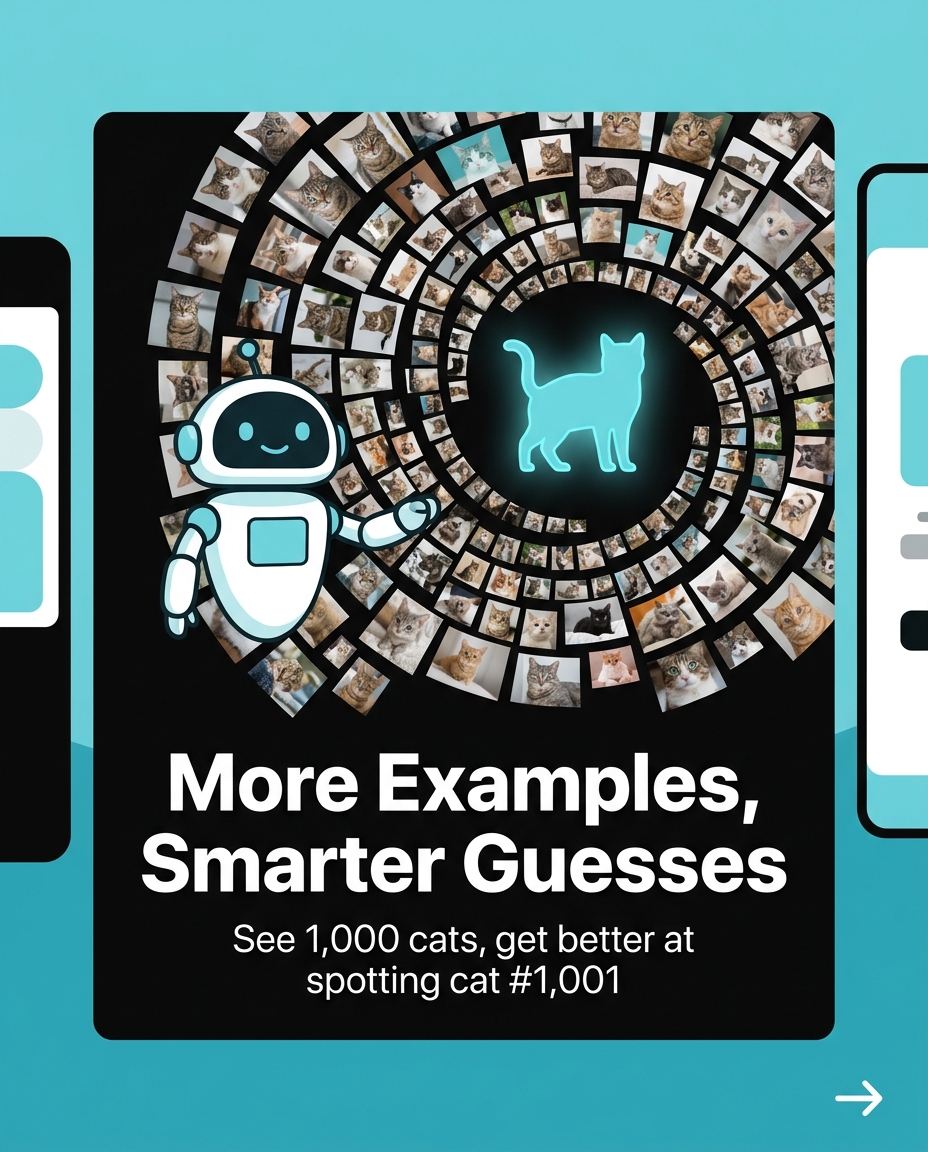
Imagine you wanted to teach a computer to recognize cats. You wouldn’t just tell it “cats have whiskers.” Instead, you’d show it thousands of pictures — maybe 50,000 photos of cats in different colors, sizes, and positions.
Step 2: Finding Patterns
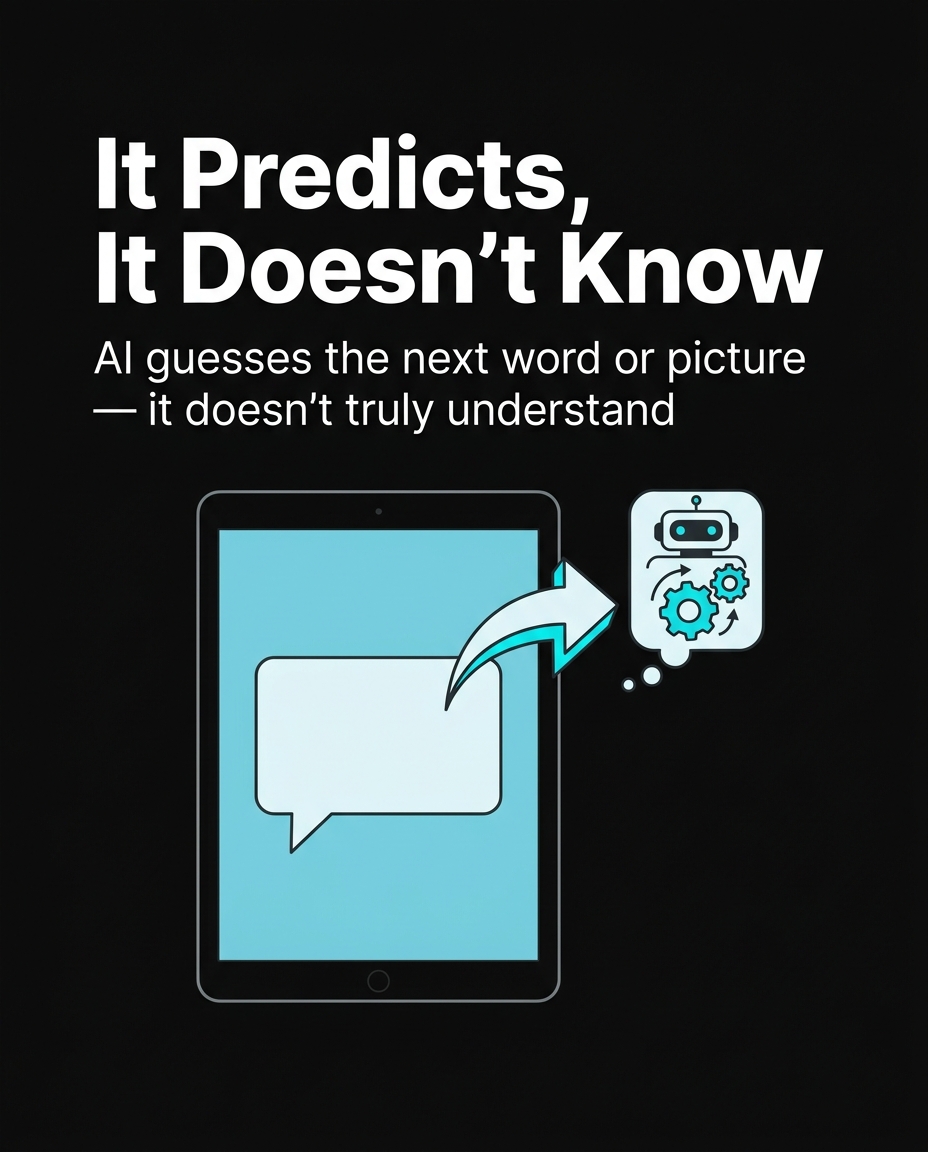
The AI studies all those pictures and starts noticing patterns: pointy ears, whiskers, fur, a certain shape of eyes. It doesn’t “know” what a cat is like you do — it just recognizes the visual patterns that repeat again and again.
Step 3: Testing and Fixing Mistakes
Next, the AI is tested with new pictures it has never seen before. If it says “That’s a dog!” when it’s actually a cat, engineers adjust the system slightly — kind of like erasing a wrong answer and trying again — until the AI gets better and better.
This is exactly how a real AI system called ImageNet was trained. Researchers used over 14 million images to teach computers to recognize different objects, and today similar systems can identify a picture correctly more than 95% of the time — which is actually better than most humans!
AI Learns From Us — Even When We Don’t Realize It
Here’s something surprising: every time you use an app, you might be helping AI learn. When you skip a song on Spotify, that tiny action teaches the AI, “This person didn’t like this song.” When you correct your phone’s autocorrect (like changing “duck” back to what you actually typed), you’re training the AI to make fewer mistakes next time.
A great real-world example is Duolingo, the language-learning app. When thousands of kids get a Spanish question wrong in the same spot, the AI notices the pattern and might change the lesson to explain that tricky word better next time. It’s constantly learning from real students, just like a teacher would learn which lessons need more practice.
Is AI Smarter Than Humans?
Not exactly — and this is an important thing to understand. AI is amazing at specific tasks it’s trained for, like recognizing pictures, translating languages, or playing chess. In fact, an AI program called AlphaGo beat the world champion of the board game Go in 2016 — a game so complex it has more possible moves than atoms in the universe!
But AI doesn’t understand feelings, creativity, or common sense the way you do. It can’t tell if a joke is actually funny, and it definitely can’t give you a hug when you’re sad. AI is powerful, but it’s a tool — like a super calculator with really advanced skills — not a replacement for human thinking and kindness.
Why Learning About AI Matters for Kids Today
AI is going to be part of almost every job in the future — from doctors using AI to detect diseases in X-rays, to video game designers using AI to build smarter characters. Understanding the basics now, while you’re young, gives you a head start.
You don’t need to be a computer expert to understand AI. You just need curiosity — the same curiosity that makes you ask “how does this work?” when you see a robot vacuum avoid your dog or a video game character react to your moves. That question is exactly how real AI engineers started too.
Want to try it out? 🚀
- 🎬 Sample lesson: Free trial
- 📋 Full syllabus: View the program
- 🎓 Enroll & details: Cyber School courses
The International Cyber School Program (Grades 4–9): live online, globally recognized certifications, from fundamentals to CTF.
Frequently Asked Questions
What is AI for kids, explained simply?
AI, or Artificial Intelligence, is when computers are taught to recognize patterns and make decisions using huge amounts of examples, similar to how you learn from experience — except AI uses data and math instead of feelings.
Can kids learn how to build AI?
Yes! Many free tools like Scratch, Machine Learning for Kids, and Google’s Teachable Machine let kids as young as 8 or 9 experiment with training simple AI models, like teaching a computer to recognize hand gestures or sounds.
Does AI ever make mistakes?
Absolutely. AI can misidentify pictures, mistranslate sentences, or give wrong answers, especially if it wasn’t trained on enough good examples. That’s why humans still need to check and guide AI systems, especially for important decisions.