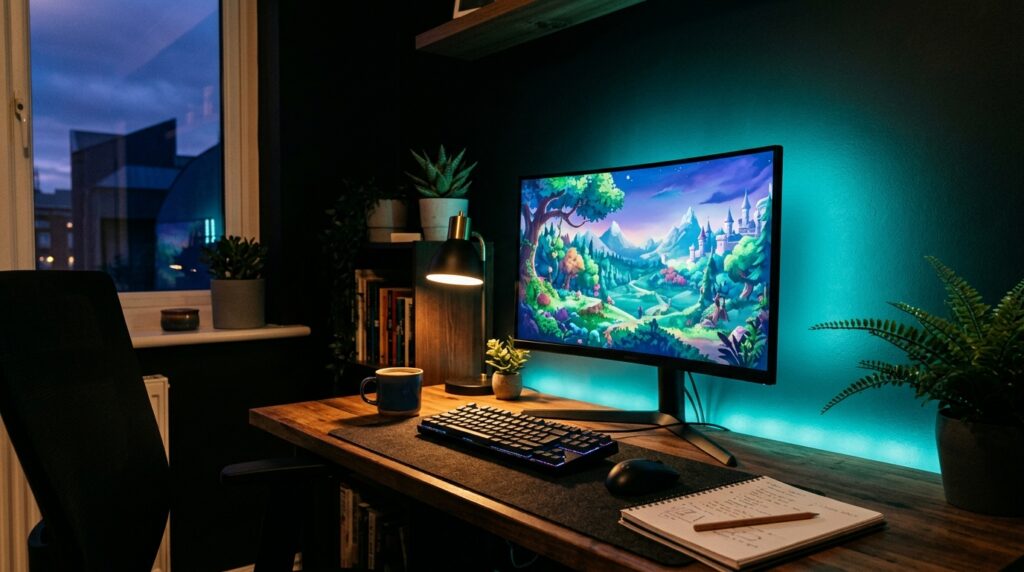
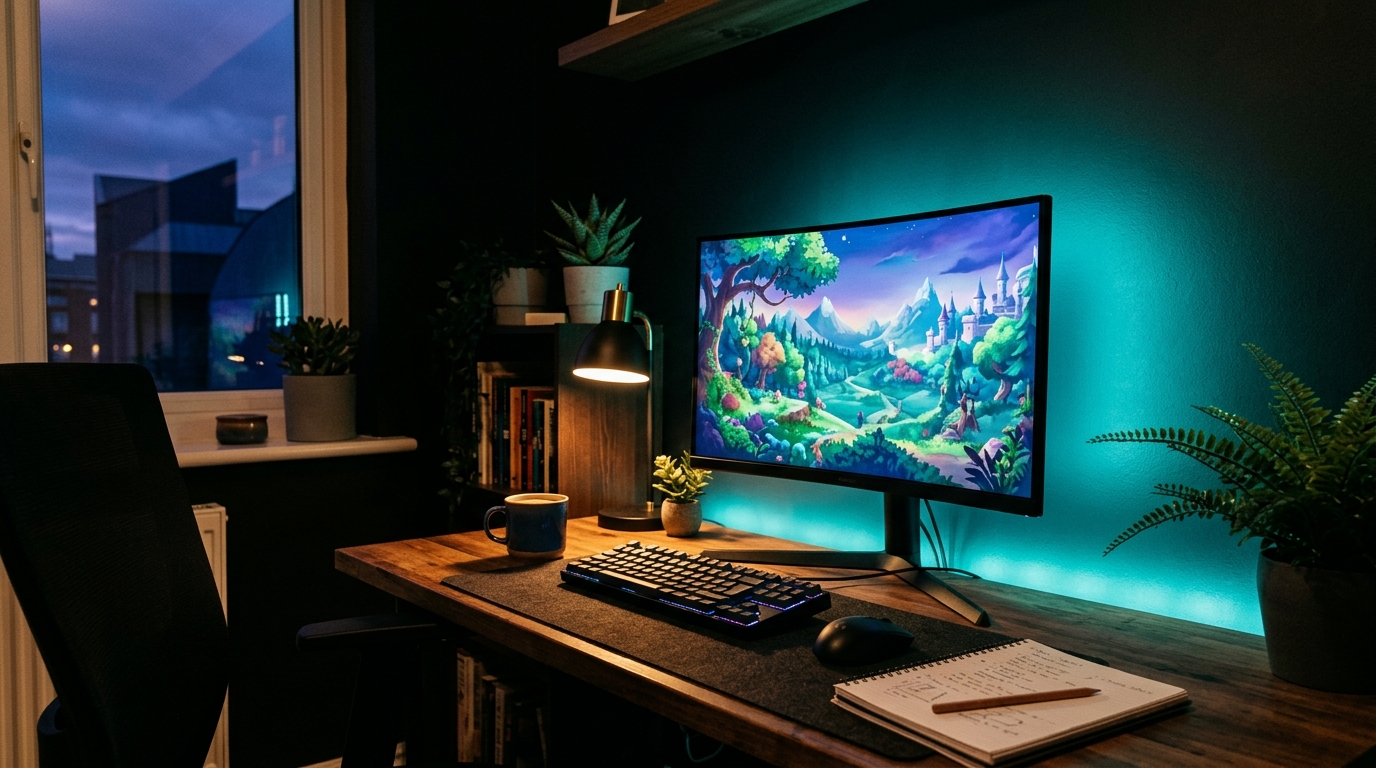
It’s 4:30 p.m., the homework is untouched, and your ten-year-old has been staring at a screen since school let out, headset on, thumbs moving faster than you can follow. The instinct for many parents is to sigh, maybe confiscate the controller, and file the afternoon under “wasted.” But a growing body of research, and the daily reality inside cybersecurity classrooms, suggests something different: what looks like idle screen time is often the raw material for real kids gaming skills that translate directly into cybersecurity, IT, and STEM careers.
This isn’t about excusing unlimited screen time or pretending every game session is educational. It’s about recognizing which specific behaviors inside gaming are transferable, and how parents can spot the difference between passive scrolling and active, skill-building play.
What Gaming Actually Trains, Beyond Reflexes
Take a game like Minecraft. A 2022 survey by the Pew Research Center found that 76% of teens who play video games regularly engage with building, modding, or redstone-circuit logic puzzles inside sandbox games at least weekly. Redstone, Minecraft’s in-game logic system, is functionally a simplified circuit board: players wire switches, gates, and outputs to build working elevators, calculators, and even simple computers. A twelve-year-old who spends three hours designing a redstone-powered lock system is practicing the exact logical sequencing used in real programming and network configuration.
Or consider Roblox, where over 40% of the platform’s young users have tried the Roblox Studio creation tools, according to Roblox’s own 2023 developer report. Kids aren’t just playing games there, they’re scripting them in Lua, a real programming language. A 13-year-old who builds a working obstacle-course game with a scoring system and player inventory has written functional code, debugged it when it broke, and iterated on it after player feedback. That loop, build, break, debug, improve, is the same loop a junior security analyst uses when patching a vulnerability.
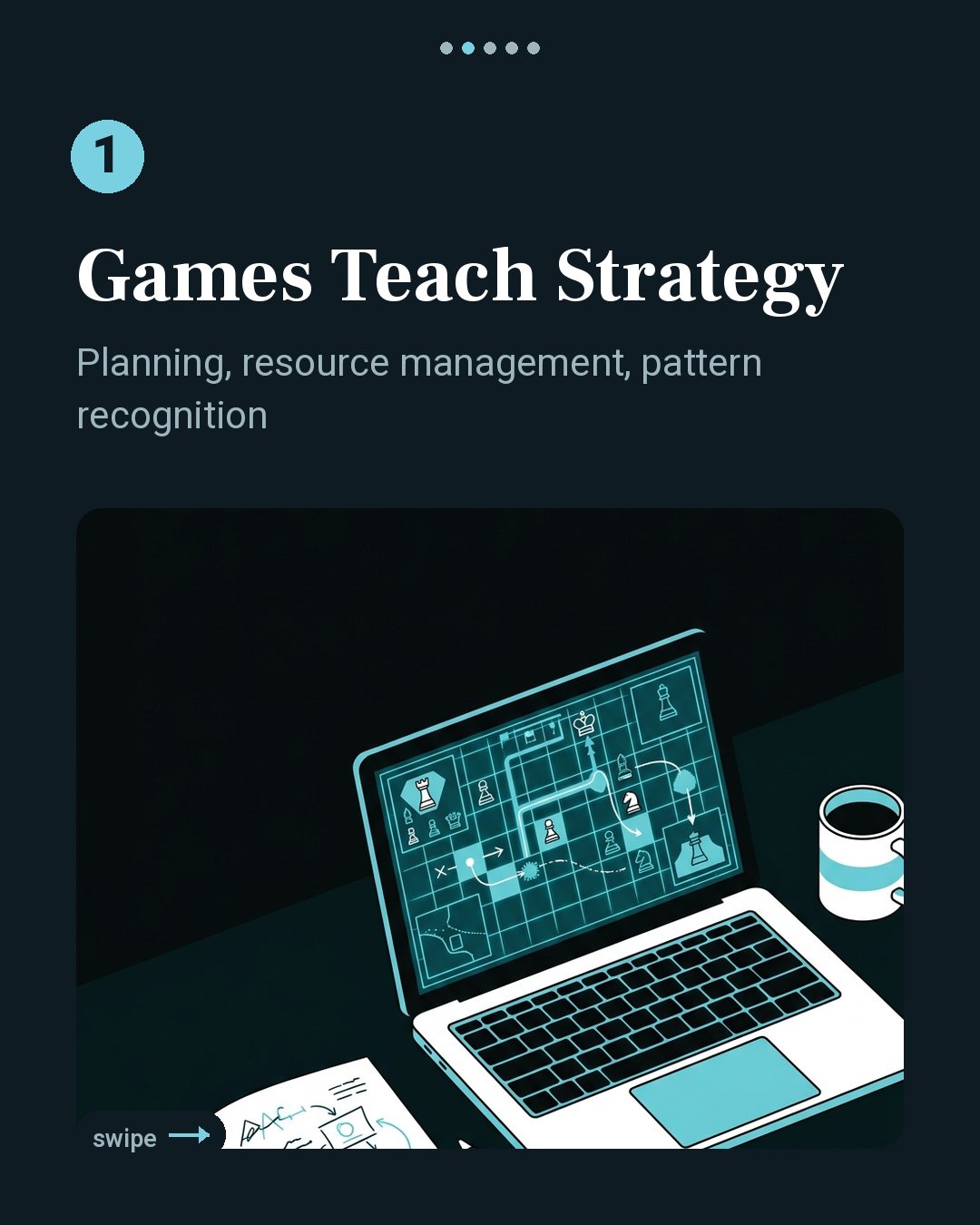
Strategy Games and the Pattern-Recognition Skillset Cybersecurity Needs
Cybersecurity professionals spend much of their day doing one core task: recognizing when something in a pattern doesn’t belong. A phishing email looks 95% like a real one. A malicious login attempt mimics normal traffic almost perfectly. The job is catching the 5% anomaly.
Strategy and puzzle games train exactly this. In Among Us, one of the most-played games among 8- to 14-year-olds in 2021 (it hit 500 million monthly players that year, per Innersloth’s own data), the entire mechanic is social-engineering detection: watching behavior, cross-referencing alibis, and spotting the one player whose story doesn’t match the timeline. That is, almost move for move, the mental process a SOC (Security Operations Center) analyst uses when triaging alerts.
Chess.com reported that kids under 14 made up its fastest-growing user segment in 2023, partly fueled by shows like The Queen’s Gambit and streamers like Hikaru Nakamura. Chess demands multi-step forward planning, the same skill used in penetration testing, where an ethical hacker has to think three moves ahead of a system’s defenses to find the exploit path.
A Real Case: From Fortnite Creative to Coding Camp
Consider a real pattern seen repeatedly in youth STEM programs: a parent enrolls a reluctant 11-year-old in a coding camp specifically because the child had spent months building custom maps in Fortnite Creative mode. Fortnite Creative uses a visual scripting system, essentially simplified logic gates and event triggers, that mirrors block-based coding platforms like Scratch. When that same child sits down with real code for the first time, the syntax is new, but the underlying logic (“if this happens, then trigger that”) is already familiar. Instructors in these programs often report that gamers, not the kids who’ve never played, tend to grasp conditional logic and event-driven programming fastest, precisely because they’ve already internalized it through play.
How Parents Can Tell the Difference
Not all gaming is equal, and it’s fair for parents to want to distinguish skill-building play from pure passive consumption. Here’s a practical way to evaluate it:
- Creating vs. consuming: Is your child building levels, writing scripts, designing systems, or only watching others play (a genre that, per a 2023 Common Sense Media report, now consumes over 60% of some kids’ screen time via platforms like YouTube Gaming and Twitch)?
- Problem-solving vs. repetition: Does the game require adapting strategy, or is it the same repetitive tap-and-reward loop (common in many mobile “idle” games designed purely for engagement, not skill)?
- Social reasoning: Does the game involve reading other players, coordinating, or detecting deception, like in team-based strategy titles, versus solo, low-cognition play?
- Persistence through failure: Does your child restart and iterate after failing a level, or quit immediately? That persistence loop is directly transferable to debugging code or troubleshooting a network issue.
A child who spends two hours a night building and refining a Roblox game is doing something categorically different from a child scrolling short-form gameplay clips for two hours. Both look identical from across the room, headset on, eyes on screen, but the cognitive activity underneath is worlds apart.
Turning the Interest Into a Direction, Not a Restriction
The instinct to cut gaming time entirely often backfires, turning something with real developmental value into a forbidden, secretive activity. A more effective approach many cybersecurity educators recommend is redirection: channeling the same instincts a child already has, pattern recognition, systems thinking, persistence, into structured environments that build on them intentionally.
For example, a child who loves the detective mechanics of Among Us may take naturally to beginner “capture the flag” cybersecurity challenges, which are essentially digital scavenger hunts built around finding hidden clues in code or network traffic. A child who enjoys Minecraft redstone logic often transitions smoothly into introductory Python or block-based coding, since the underlying “if-then” logic is already second nature.

The Bigger Picture for Parents
The U.S. Bureau of Labor Statistics projects a 32% growth rate for information security analyst roles between 2022 and 2032, far outpacing the average for all occupations. That demand isn’t going to be filled only by kids who took a formal coding class at age 8. Many of tomorrow’s cybersecurity professionals are, right now, sitting in front of a screen building a redstone contraption or debugging a Roblox script, and they don’t even know it counts as practice.
None of this means gaming should replace homework, sleep, or outdoor time, boundaries still matter, and moderation is still healthy. But the next time your child is deep in a game session, it’s worth pausing before assuming it’s wasted time. Ask what they’re building. Ask what broke and how they fixed it. You might find the “opportunity” was there all along, just disguised as an afternoon of gaming.
Want to try it out? 🚀
- 🎬 Sample lesson: Free trial
- 📋 Full syllabus: View the program
- 🎓 Enroll & details: Cyber School courses
The International Cyber School Program (Grades 4–9): live online, globally recognized certifications, from fundamentals to CTF.
Frequently Asked Questions
How much gaming time is actually healthy for a child developing these skills?
Most pediatric guidelines, including those from the American Academy of Pediatrics, recommend consistent daily limits (often 1-2 hours on school days for kids under 13) rather than an all-or-nothing approach. The goal isn’t more screen time, it’s making existing time count by favoring creative or strategic games over passive content consumption.
My child only plays shooter games like Call of Duty, does that have any transferable value?
Yes, though differently than sandbox or strategy games. Fast-paced shooters build reaction time, situational awareness, and quick decision-making under pressure, all relevant to roles like incident response, where analysts must react quickly to active threats. The key is balancing it with at least some creative or logic-based play too.
What’s a low-pressure first step to turn gaming interest into a real skill, without a full course or camp?
Free platforms like Roblox Studio, Scratch, or beginner “capture the flag” cybersecurity challenges (many are available free online) let kids experiment in the same playful format they already enjoy, no classroom pressure required, just an extension of what they’re already doing.