

Zero trust is not a product you buy — it’s a security model built on one blunt assumption: never trust, always verify. No user, device, or application gets automatic access just because it’s already “inside” the network. In a world where the network perimeter has effectively dissolved, this shift has become one of the most consequential changes in enterprise cybersecurity architecture.
The Old Model: Trust the Perimeter
For decades, corporate security worked like a castle with a moat. Firewalls and VPNs formed the wall; once you were inside — connected to the office network or logged into the VPN — you were largely trusted to roam. This worked reasonably well when employees sat at desks, applications lived in on-prem data centers, and the “inside” was a meaningful boundary.
That model broke down publicly and expensively. The 2013 Target breach is a textbook case: attackers stole credentials from a third-party HVAC vendor, used them to get onto the internal network, and then moved laterally — unchallenged — until they reached point-of-sale systems and exfiltrated data from 40 million credit and debit cards. Nothing inside the network stopped them, because nothing inside the network was designed to ask “should this specific request be trusted right now?”
What Zero Trust Actually Changes
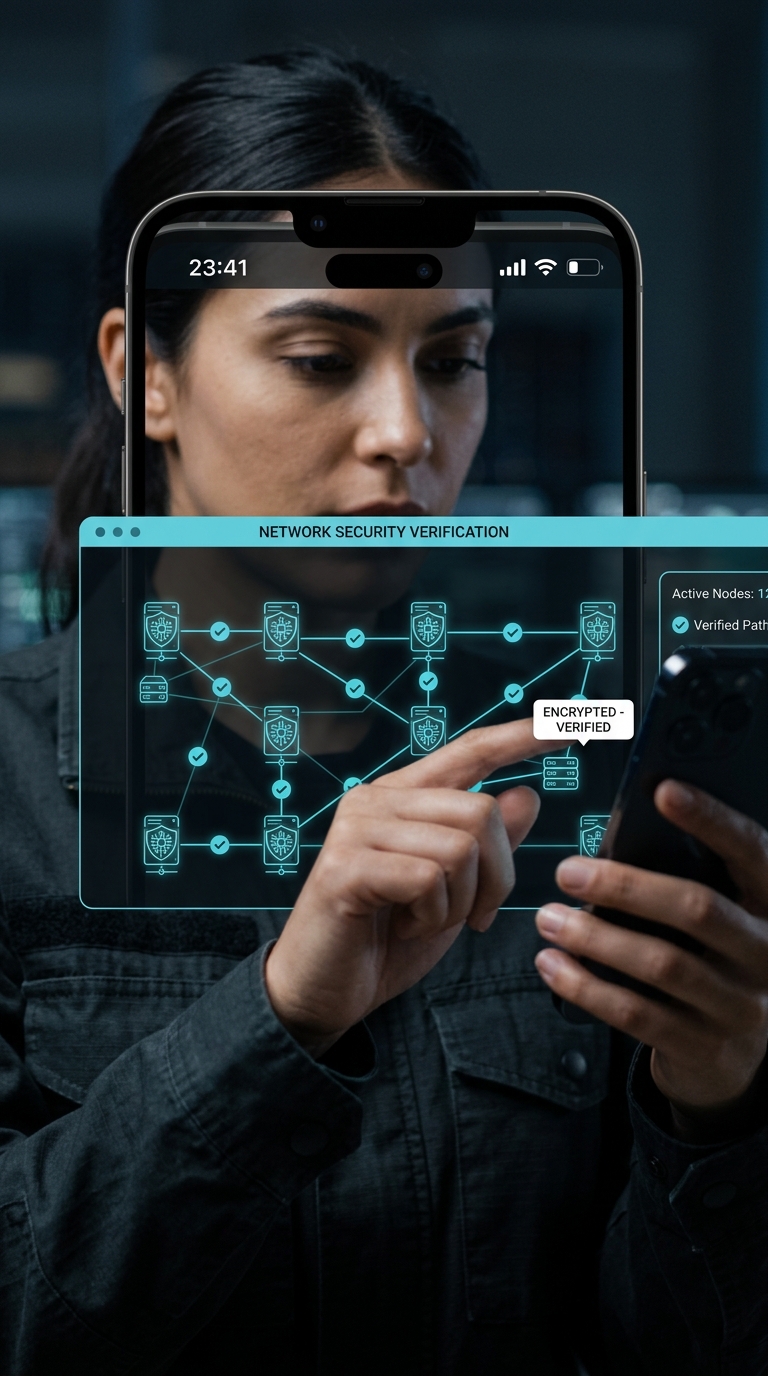
Zero trust replaces implicit trust with continuous, contextual verification. Every request — a laptop pinging a file server, an app calling an API, a contractor opening a shared drive — is evaluated on its own merits, every time, based on signals like:
- Identity — Is this really the authenticated user, verified with multi-factor authentication?
- Device posture — Is the device patched, encrypted, and free of known malware?
- Location and behavior — Is this login consistent with the user’s normal pattern, or is it 2 a.m. from a new country?
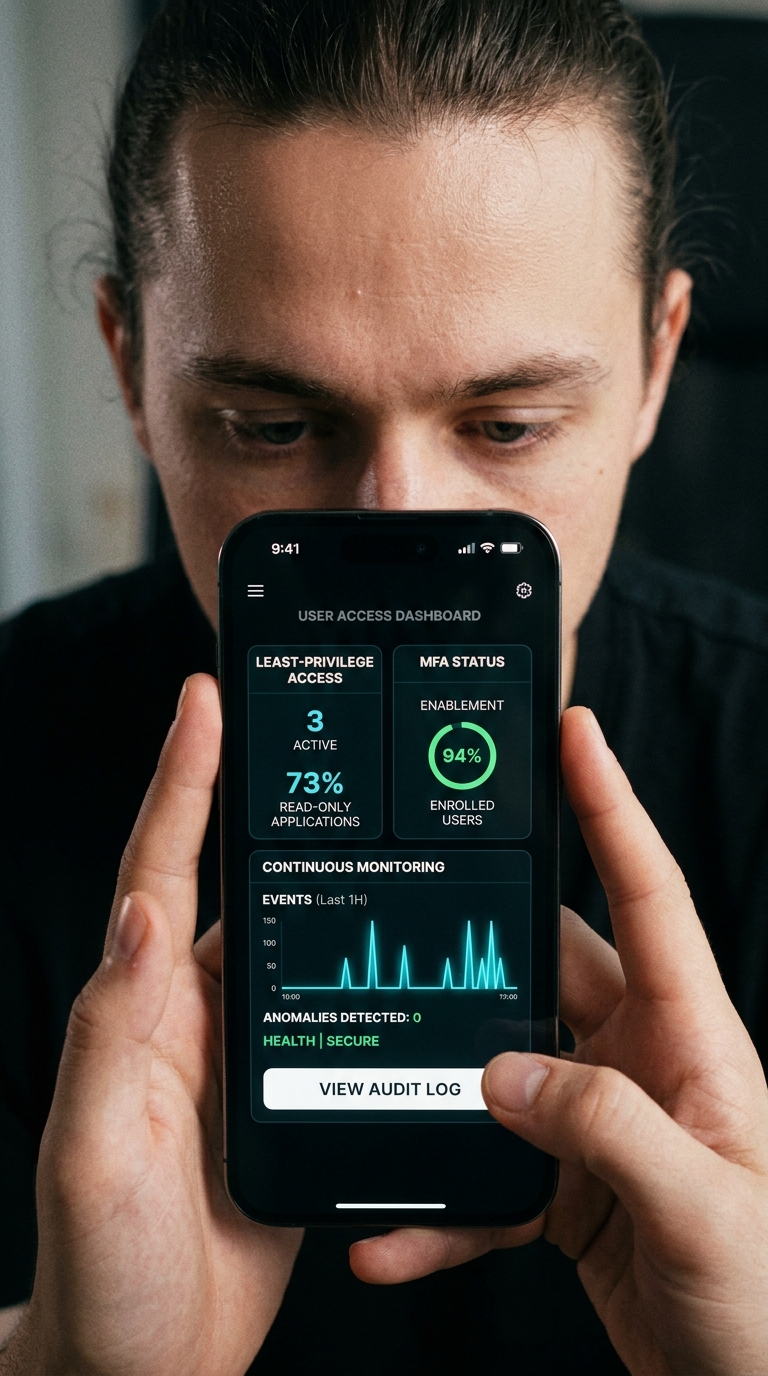
- Least privilege — Does this account actually need access to this specific resource, or just to resources like it?
Google’s internal rollout, known as BeyondCorp, is the most cited real-world case. After the 2009 “Operation Aurora” attacks — where intruders compromised internal systems via a phishing link and moved through Google’s internal network — the company spent roughly six years re-architecting access so that no request, even from inside Google’s own offices, was trusted by default. Every access decision now depends on device certificates, identity verification, and context, evaluated per-request, regardless of network location. Employees now log into internal tools the same way whether they’re at headquarters or a coffee shop in another country — because the network location itself carries zero weight in the trust decision.

Zero Trust in 30 Seconds: The Core Loop
If you strip zero trust down to its essential mechanic, it’s a repeating loop that runs on every single access request:
- 1. Verify identity — strong authentication, not just a password.
- 2. Check device and context — is this device compliant, is this behavior normal?
- 3. Grant the minimum access needed — for this one task, not the whole network.
- 4. Log and re-evaluate continuously — trust expires; it isn’t a one-time gate.
That’s the whole model. No permanent VPN tunnel. No “trusted subnet.” Just constant, granular checks — the same logic a bank uses when it flags a card swipe in Tokyo three hours after one in Chicago, except applied to every login, file request, and API call across the company.
A Real Breach That Zero Trust Would Have Slowed
Consider the 2020 SolarWinds supply-chain attack. Attackers inserted malicious code into a software update, which was then installed by roughly 18,000 organizations, including US federal agencies. Once inside, attackers moved laterally through networks that trusted internal traffic by default — exactly the condition zero trust is designed to eliminate. Organizations that had already segmented access with least-privilege controls and continuous verification of internal requests were able to contain the blast radius far faster, because a compromised internal server didn’t automatically mean access to everything connected to it.
This is the practical payoff: zero trust doesn’t promise breaches won’t happen. It promises that when — not if — one account or one device is compromised, the attacker hits a wall at the next request, not free rein across the network.
Why This Matters More Since 2020
Remote work accelerated the urgency. In 2019, most employees connected from managed offices on managed networks. By 2021, Gartner estimated that over 50% of the workforce was working at least partially remotely, connecting from home routers, personal devices, and public Wi-Fi — environments IT teams don’t control and can’t inherently trust. The US federal government responded formally: Executive Order 14028, signed in May 2021, mandated that federal agencies move toward zero trust architecture, citing incidents like SolarWinds and the Colonial Pipeline ransomware attack as direct motivation.
NIST followed with Special Publication 800-207, which is now the reference architecture most enterprises and vendors build against. It’s not a checkbox standard — it’s a set of principles (verify explicitly, use least-privilege access, assume breach) that guide how identity providers, network segmentation tools, and endpoint security products are designed and deployed together.
What Zero Trust Is Not
It’s worth being precise, because the term gets marketed loosely. Zero trust is not a single firewall setting, not just a VPN replacement, and not a product you install in an afternoon. It’s an architectural philosophy that touches identity management, network segmentation, device monitoring, and application access control simultaneously. A company that buys a “zero trust” tool but still lets any authenticated device reach the entire internal network hasn’t implemented zero trust — it’s implemented a rebrand.
The Takeaway for Security Teams
Zero trust succeeds when it becomes invisible: legitimate users barely notice the extra verification, while illegitimate access — a stolen password, a compromised vendor account, a malicious insider — hits friction at every single step instead of a single locked front door. That’s the entire model, distilled: assume nothing, verify everything, limit access to exactly what’s needed, and keep checking.
Want to try it out? 🚀
- 🎬 Sample lesson: Free trial
- 📋 Full syllabus: View the program
- 🎓 Enroll & details: Cyber School courses
CSRP — Cyber Security Responder & Practitioner. Hands-on labs, job-ready skills, industry certifications for career-changers and pros.
Frequently Asked Questions
Is zero trust the same thing as a VPN replacement?
No. A VPN grants broad network access once you connect; zero trust evaluates every individual request to every individual resource, continuously, regardless of how you connected.
Do small businesses need zero trust, or is it only for large enterprises?
Any organization with remote employees, cloud apps, or third-party vendors benefits. The 2013 Target breach started through a small HVAC vendor’s credentials — scale doesn’t determine risk, access design does.
Does zero trust require replacing all existing security tools?
No. Most organizations implement it incrementally by adding identity verification, device compliance checks, and network segmentation on top of existing infrastructure, following frameworks like NIST SP 800-207.